EVD Device LTAC Facility: Understanding External Ventricular Drain Care in Long-Term Acute Care
What Is an EVD Device LTAC Facility?
The phrase evd device ltac facility brings together two important concepts in specialized neurological care: an external ventricular drain, commonly called an EVD, and a Long-Term Acute Care facility, commonly known as an LTAC or LTACH. Understanding how these two concepts relate to one another is important because patients recovering from serious neurological conditions may require highly specialized monitoring even after they no longer need the same level of emergency treatment provided in an intensive care unit.
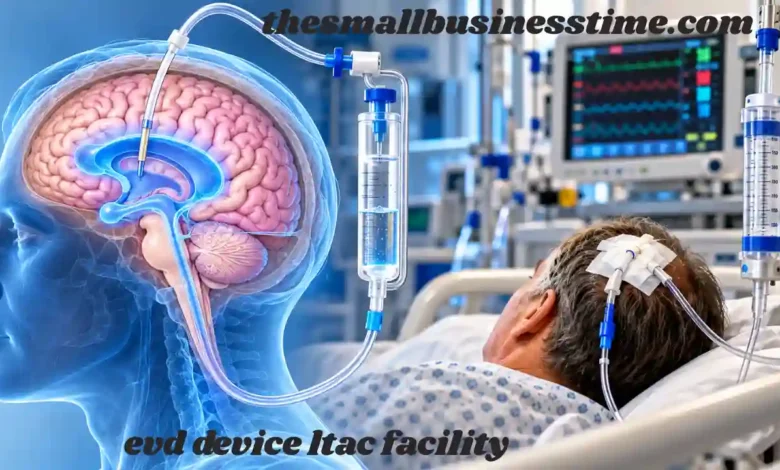
An external ventricular drain is a temporary medical system used to drain cerebrospinal fluid, or CSF, from the brain’s ventricles. It can also allow healthcare professionals to monitor intracranial pressure. EVDs are commonly used when conditions such as hydrocephalus, intracranial hemorrhage, traumatic brain injury, or other neurological problems result in increased pressure or impaired circulation of cerebrospinal fluid. Because the device involves the brain and requires careful positioning, monitoring, and infection-control practices, its management is considerably more complex than that of many ordinary drainage devices.
An LTAC facility, meanwhile, is designed for patients who remain medically complex and require extended acute-level care, monitoring, treatment, or rehabilitation after an initial hospitalization. The exact capabilities of LTAC facilities vary considerably. Therefore, the presence of an EVD does not automatically mean that every LTAC facility can accept a patient with one. The facility must have the appropriate neurological expertise, nursing competencies, equipment, physician coverage, emergency response capabilities, and policies necessary to manage that particular patient’s needs.
This distinction is especially important because a conventional EVD is generally considered a temporary solution rather than a routine long-term device. Some hospitals describe typical EVD use as lasting days rather than months, with the clinical team assessing the patient regularly to determine whether the drain can be weaned and removed or whether another form of CSF diversion is needed.
How an External Ventricular Drain Works
The basic purpose of an EVD is to provide a controlled pathway for cerebrospinal fluid to leave the brain’s ventricular system. The catheter is placed into a ventricle and connected to an external collection and monitoring system. Depending on the system and medical orders, the EVD can be used for controlled CSF drainage and intracranial pressure monitoring.
The brain and spinal cord are surrounded by cerebrospinal fluid. This fluid provides protection and participates in several important physiological functions. Under normal circumstances, CSF circulates and is absorbed in a balanced process. When circulation becomes blocked or absorption is disrupted, fluid can accumulate and contribute to hydrocephalus and increased intracranial pressure.
The EVD system provides clinicians with a way to temporarily manage this problem. The external collection system can be positioned at a prescribed level, allowing gravity and the pressure relationship within the system to influence drainage. Because the height and position of the drainage system matter, accidental movement or incorrect positioning can potentially change how much CSF drains.
An EVD may also incorporate a pressure-monitoring component. This can give clinicians information about intracranial pressure and help them evaluate whether the patient’s neurological condition is improving, remaining stable, or deteriorating. This combination of drainage and monitoring is one reason EVDs are particularly valuable in neurocritical care.
Why Patients May Need an EVD
There are several neurological conditions in which an EVD may be considered. Acute hydrocephalus is one of the major indications because excessive CSF accumulation can increase pressure within the skull. An EVD can provide temporary drainage while the underlying problem is evaluated and treated.
Patients with intracranial hemorrhage can also require ventricular drainage. Blood entering the ventricular system can interfere with normal CSF circulation and contribute to hydrocephalus. Similarly, certain patients with subarachnoid hemorrhage or traumatic brain injury may develop complications involving CSF circulation or elevated intracranial pressure.
Severe neurological infections can also be associated with circumstances in which CSF drainage and intracranial pressure management become necessary. However, the decision to place an EVD depends on the individual patient’s condition, imaging findings, neurological examination, and overall treatment plan.
The presence of an EVD therefore indicates that the patient has a condition requiring close neurological management. It should not be viewed simply as another type of catheter. The device directly relates to brain physiology, which makes correct handling, monitoring, and infection prevention especially important.
Understanding the LTAC Facility Setting
An LTAC facility provides care for medically complex patients who need longer periods of hospital-level treatment than is generally provided during a conventional short-stay acute hospitalization. Patients may arrive at an LTAC facility after treatment in an intensive care unit or another acute hospital environment.
These patients may still need respiratory support, complex wound care, intravenous medications, nutritional support, neurological monitoring, rehabilitation, or other specialized services. Some patients have multiple medical conditions at the same time, making coordination between physicians, nurses, therapists, pharmacists, and other professionals particularly important.
When discussing an evd device ltac facility, the most important question is not simply whether an LTAC building exists, but whether the specific facility has the clinical resources necessary to manage a patient with an external ventricular drain.
A facility may have extensive experience caring for medically complex patients but still not accept patients with conventional EVDs. Another facility may have established neurological protocols and specialized staff. Acceptance policies can therefore differ between institutions.
Can a Patient With an EVD Go to an LTAC Facility?
Whether a patient with an EVD can transfer to an LTAC facility depends on several clinical and operational factors. The patient’s neurosurgical team usually plays an important role in determining whether transfer is appropriate.
Conventional EVDs are generally used temporarily, and hospitals often attempt to remove them as soon as clinically appropriate because catheter-related complications, including infection, are important concerns. Mayo Clinic notes that healthcare professionals generally seek to remove an EVD as soon as possible when it is no longer needed.
For this reason, an LTAC transfer while a conventional EVD remains in place may require a particularly detailed evaluation. The receiving facility may need to confirm that it has qualified staff who understand EVD leveling, monitoring, drainage orders, neurological assessments, troubleshooting procedures, and emergency escalation.
The facility may also require a clear treatment plan from the sending hospital. This can include the reason for the EVD, current drainage settings, recent intracranial pressure information, neurological status, infection status, imaging results, medication requirements, and the anticipated plan for weaning or removal.
EVD Monitoring in an LTAC Environment
Monitoring an EVD involves more than simply checking whether fluid is accumulating in the collection chamber. Healthcare professionals may need to assess the patient’s neurological condition, monitor the drainage system, verify the prescribed level, evaluate CSF output, observe the insertion site, and watch for potential complications.
Nursing care is particularly important. Published reviews describe EVD maintenance, monitoring, and troubleshooting as significant nursing responsibilities. Proper leveling, maintaining system integrity, observing drainage, and monitoring intracranial pressure information are all important components of safe management.
The patient’s neurological examination is also essential. Changes in consciousness, pupil responses, strength, speech, behavior, headache, vomiting, or other neurological findings can potentially indicate deterioration and require immediate medical evaluation.
An LTAC facility considering an EVD patient therefore needs a nursing team capable of recognizing subtle changes and responding according to established protocols.
Why EVD Positioning Matters
One of the distinctive characteristics of an EVD is that the drainage system’s position can influence CSF drainage. The collection chamber is typically leveled according to a prescribed reference point, and changes in the patient’s position may require the system to be reassessed.
This is why staff members should not treat an EVD like a standard urinary drainage bag or other simple collection device. Movement, transport, bed adjustments, or repositioning can have implications for drainage.
Hospital guidance explains that the drainage system works partly through gravity and that the position of the collection chamber relative to the ventricles affects drainage.
For an evd device ltac facility, staff training around positioning is therefore an important consideration. The receiving team needs to understand the patient’s individual orders rather than applying a generic setting.
Infection Prevention and EVD Care
Infection prevention is one of the major concerns associated with external ventricular drains. The catheter creates a pathway between the external environment and the ventricular system, meaning contamination can have serious consequences.
The Neurocritical Care Society’s consensus statement identifies infection among the important complications associated with EVDs and emphasizes the need for evidence-based management practices.
An LTAC facility managing a patient with an EVD should therefore have clear infection-control procedures. These may include appropriate hand hygiene, sterile or aseptic handling according to institutional policy, careful management of connections, observation of the insertion site, and prompt evaluation of possible infection.
Potential warning signs can include fever, changes in neurological status, unusual drainage characteristics, redness or discharge around the insertion site, or other findings that concern the treating team. The exact response should follow the patient’s medical orders and facility protocol.
Communication Between the Hospital and LTAC Facility
A successful transfer involving an EVD requires detailed communication. The sending hospital should provide the receiving team with enough information to understand why the EVD was placed and how it is currently being managed.
Important information can include the original neurological diagnosis, imaging findings, surgical history, current neurological status, EVD type, drainage instructions, prescribed pressure level, recent CSF output, ICP information when applicable, insertion-site condition, infection history, current medications, and planned neurosurgical follow-up.
The receiving team should also know what circumstances require immediate neurosurgical consultation or transfer back to an acute-care hospital.
Clear communication is especially important because EVD management can vary depending on the underlying condition. There is no single universal drainage strategy appropriate for every neurological diagnosis. Evidence reviews have noted variation in EVD management practices and uncertainty regarding the optimal approach in different clinical circumstances.
EVD Weaning and Removal
The ultimate goal for many patients with a conventional EVD is removal when it is safe to do so. The medical team may gradually evaluate whether the patient can maintain appropriate CSF circulation without continuous external drainage.
A common approach involves challenging the drain by changing its drainage conditions or temporarily clamping it according to the treating team’s protocol. The patient’s neurological status, intracranial pressure when monitored, imaging, and other clinical factors can help determine whether the brain can maintain adequate CSF dynamics without the drain.
If the patient tolerates the process, the neurosurgical team may remove the EVD. If the patient continues to require CSF diversion, another treatment may be considered.
Patient information from Leeds Teaching Hospitals explains that the neurosurgical team reviews the need for an EVD regularly and may challenge the drain before removal. If ongoing CSF drainage remains necessary, a more permanent alternative may be discussed.
When a Permanent CSF Diversion May Be Considered
An EVD is different from a permanent shunt. An EVD is designed as an external temporary system, whereas a ventricular shunt is designed to provide longer-term CSF diversion.
If a patient’s body cannot adequately absorb or circulate CSF after the acute neurological problem has stabilized, the treating team may consider a permanent shunt. A ventriculoperitoneal shunt is one example of a long-term CSF diversion system.
The decision is individualized and may depend on the cause of hydrocephalus, clinical progress, imaging, response to EVD weaning, and other neurological factors.
This is one reason why the term evd device ltac facility should not automatically be interpreted as meaning that every patient needs an EVD for an extended period. In many cases, the clinical objective is to stabilize the patient, determine whether normal CSF circulation can resume, and remove the temporary drain as soon as appropriate.
Long-Tunneled External Ventricular Drains
There are special situations in which clinicians have investigated long-tunneled external ventricular drains. These are different from the conventional short-term EVD arrangements commonly encountered in neurocritical care.
Published literature describes long-tunneled external ventricular drains as an option in selected situations involving prolonged CSF drainage, including certain difficult cases of chronic hydrocephalus. One published pediatric case described long-term community management using bilateral long-tunneled external ventricular drains with multidisciplinary support and specialized nursing protocols.
Other technical literature has described long-tunneled systems incorporating shunt-valve components and subcutaneous tunneling to extend the period of drainage in selected patients. These approaches are specialized and should not be confused with routine conventional EVD care.
Therefore, when researching an evd device ltac facility, it is important to determine which type of ventricular drainage system is actually being discussed.
Staff Training for an EVD Device LTAC Facility
Staff competency is one of the most important considerations for any facility receiving an EVD patient. Training may need to cover the components of the drainage system, prescribed settings, leveling, neurological assessment, drainage monitoring, infection prevention, emergency procedures, and communication with neurosurgical specialists.
Staff should understand that EVD orders are patient-specific. A nurse or caregiver should not independently change drainage settings unless authorized under the patient’s medical orders and facility policy.
Training should also include what to do if the tubing becomes disconnected, the system is accidentally moved, drainage unexpectedly stops, excessive drainage occurs, the patient develops neurological changes, or the insertion site appears abnormal.
Research and clinical reviews have emphasized the importance of standardized EVD practices because variations in care can contribute to safety concerns.
Patient and Family Education
Families may feel anxious when they see an EVD attached to a loved one’s head. Explaining the purpose of the device can make the situation easier to understand.
Family members should know that the drain is carefully managed and that its position matters. They should avoid touching, moving, clamping, or adjusting the system unless specifically instructed by qualified healthcare professionals.
Patients and families should also understand why the medical team performs frequent neurological assessments. These checks help clinicians identify changes that could require further investigation.
Questions about how long the EVD will remain in place are common. There is no universal answer because duration depends on the patient’s underlying condition and response to treatment. Some clinical guidance describes conventional EVDs as temporary devices that are rarely used for more than approximately two weeks, although individual cases and specialized systems can differ.
Transporting an EVD Patient
Transport is another major consideration when an EVD patient is moved within or between facilities. The drainage system must remain appropriately managed during transportation, and staff need to understand whether the drain should remain open, closed, clamped, or otherwise configured according to the patient’s specific medical orders.
The patient’s neurological status and monitoring requirements also need to be considered.
Transport planning should therefore involve the clinical team rather than treating the move as an ordinary patient transfer. The receiving facility needs to confirm that appropriate personnel and equipment will be available immediately when the patient arrives.
Care literature emphasizes the importance of planning when transporting patients with ventricular or lumbar drains and remaining alert to issues such as CSF leakage or catheter displacement.
Potential Complications Associated With EVDs
Although EVDs can be lifesaving, they also have potential complications. These can include infection, bleeding along the catheter tract, catheter malposition, obstruction, disconnection, accidental removal, CSF leakage, and excessive or inadequate drainage.
The Neurocritical Care Society’s consensus statement specifically identifies complications such as hemorrhage along the catheter tract, malposition, and CSF infection.
Overdrainage can also be concerning because excessive CSF removal may result in abnormally low intracranial pressure. Patient guidance from Leeds Teaching Hospitals notes symptoms such as feeling unwell, sweating, nausea, or marked sleepiness as possible signs requiring immediate attention in the context of excessive drainage.
These risks explain why a conventional EVD generally requires close clinical supervision and why not every post-acute facility is equipped to manage one.
Questions to Ask About an EVD Device LTAC Facility
When evaluating an LTAC facility for a patient with an EVD, families and hospital teams may want to ask several practical questions.
First, does the facility currently accept patients with conventional EVDs?
Second, does the facility have nurses specifically trained in EVD management?
Third, is neurosurgical consultation available when required?
Fourth, what monitoring is available for neurological patients?
Fifth, what is the facility’s protocol for unexpected changes in neurological status?
Sixth, what happens if the EVD becomes disconnected, obstructed, displaced, or accidentally removed?
Seventh, does the facility have a defined pathway for urgent transfer to a hospital with neurosurgical services?
Finally, does the facility have experience coordinating EVD weaning and removal with a neurosurgical team?
These questions can help distinguish between a facility that provides general long-term acute care and one that has the specific neurological capabilities needed for an EVD patient.
How an LTAC Team May Work With Neurosurgical Specialists
An EVD patient often requires multidisciplinary care. The LTAC team may include nurses, physicians, therapists, pharmacists, respiratory specialists, nutrition professionals, case managers, and other clinicians depending on the patient’s condition.
The neurosurgical team remains particularly important when decisions involve the EVD itself. The LTAC facility may coordinate appointments, imaging, drain trials, and eventual removal according to the specialist’s recommendations.
This collaborative approach is important because neurological recovery can involve more than controlling CSF pressure. A patient recovering from a stroke, traumatic brain injury, hemorrhage, infection, or other neurological condition may also need physical therapy, occupational therapy, speech therapy, nutritional management, cognitive support, and assistance with daily activities.
Why Every EVD Patient Is Different
One of the most important things to understand about an evd device ltac facility is that there is no universal care plan that applies to every patient.
Two patients may both have EVDs but have completely different diagnoses. One may have hydrocephalus after hemorrhage, while another may have an EVD following traumatic brain injury. Their drainage orders, monitoring needs, medications, neurological status, and expected recovery may be completely different.
The evidence surrounding optimal EVD management also remains an area of clinical discussion. Reviews have found variation between institutions in approaches such as continuous versus intermittent drainage and rapid versus gradual weaning.
For that reason, EVD management should always be guided by the patient’s treating medical and neurosurgical teams rather than by a generic online description.
The Importance of Specialized LTAC Capabilities
A suitable LTAC environment for an EVD patient needs more than a bed and basic nursing services. It requires an appropriate combination of skilled staff, monitoring capabilities, infection-control procedures, emergency response protocols, physician coverage, and access to neurosurgical expertise.
Facilities may also differ in their admission criteria. Some may require the EVD to be removed before admission, while others may accept selected patients under specialized arrangements.
The exact capabilities should therefore be verified directly with the facility and the patient’s hospital team.
The Future of EVD and Extended Care
Advances in neurosurgery and critical care continue to influence how clinicians approach CSF drainage. Researchers have investigated different drainage strategies, infection-prevention approaches, monitoring methods, and specialized long-tunneled systems.
The goal remains to provide effective management of intracranial pressure and CSF circulation while minimizing complications and avoiding unnecessary prolonged external drainage.
For patients who require extended neurological care, the relationship between acute hospitals, LTAC facilities, rehabilitation services, and specialist teams can become particularly important. Better coordination may help ensure that patients receive the appropriate level of care as their condition changes.
Final Thoughts on EVD Device LTAC Facility
The term evd device ltac facility describes an important intersection between neurological medical technology and extended acute care. An external ventricular drain can provide temporary CSF diversion and intracranial pressure monitoring for patients with serious neurological conditions. At the same time, an LTAC facility can provide continued medical management for patients who remain complex but may no longer require the same type of care provided in an emergency or intensive care environment.
However, a conventional EVD requires specialized handling and close monitoring. Its position, drainage level, connections, insertion site, CSF output, and the patient’s neurological condition all require careful attention. Infection prevention and emergency response are also essential considerations.
Not every LTAC facility is equipped to manage an EVD. The suitability of a particular facility depends on its staffing, training, equipment, policies, neurological expertise, and relationship with neurosurgical services. Patients and families should therefore work with the treating hospital and receiving facility to confirm that the necessary services are available.
Ultimately, an EVD is usually intended to be a temporary part of a patient’s neurological treatment journey. As the patient’s condition improves, clinicians may evaluate whether the drain can be weaned and removed. If CSF circulation remains impaired, another treatment strategy may be considered.
Understanding what an evd device ltac facility means can help patients, families, caregivers, and healthcare professionals communicate more effectively about the level of care required. The most important principle is that EVD management should remain individualized, carefully monitored, and coordinated with qualified neurological and neurosurgical professionals.
Frequently Asked Questions About EVD Device LTAC Facility
What does EVD stand for?
EVD stands for external ventricular drain. It is a temporary system used to drain cerebrospinal fluid from the brain’s ventricles and, in many cases, monitor intracranial pressure.
Can every LTAC facility manage an EVD?
No. LTAC facilities have different capabilities and admission criteria. A facility must have appropriately trained staff, equipment, protocols, and specialist support before accepting a patient who still requires EVD management.
How long can an EVD remain in place?
The duration varies according to the patient’s condition and treatment plan. Conventional EVDs are generally temporary, and clinicians typically evaluate regularly whether the device can be weaned and removed.
Why is EVD infection prevention important?
An EVD provides a pathway into the ventricular system, so infection can be a serious complication. Careful handling, appropriate infection-control procedures, and close observation are important parts of EVD management.
What happens after an EVD is no longer needed?
If the patient successfully tolerates a drain-weaning or clamping trial and no longer requires external CSF drainage, the neurosurgical team may remove the EVD. If ongoing CSF diversion is necessary, another treatment, potentially including a permanent shunt, may be considered.
ALSO READ : Can Tonsils Grow Back After Being Removed – Tymoff