Telemetryczny: Meaning, Technology, Applications, Benefits, and the Future of Telemetric Systems
Introduction to Telemetryczny
The word telemetryczny is associated with telemetry, a technology that makes it possible to collect, transmit, and analyse information from distant locations, devices, machines, and systems. It is a Polish adjective that generally translates into English as “telemetric” or “related to telemetry.” Although the term may not be familiar to everyone, the technology behind it has become an important part of modern life. From industrial production and transportation to healthcare, telecommunications, environmental monitoring, and scientific research, telemetry helps people understand what is happening in places they cannot continuously observe.
In a world where technology is becoming increasingly connected, the ability to receive information remotely has considerable value. Businesses need to monitor equipment, engineers want to understand machine performance, medical professionals need information about patients, and researchers collect data from environments that may be difficult to access. Telemetry provides a practical way to accomplish these tasks. Instead of requiring someone to visit every location and manually collect measurements, telemetric systems can automatically gather information and send it to another location for examination.
The concept of telemetry is not limited to a particular industry. It can be applied wherever measurements need to travel from one point to another. A vehicle can transmit information about its engine, a weather station can send atmospheric measurements, and a medical device can communicate important readings to healthcare professionals. In each situation, the fundamental objective remains similar: obtain useful information from a remote source and make it available for analysis.
Understanding the meaning of telemetryczny therefore requires looking beyond the word itself. It involves exploring the technology, communication methods, equipment, applications, advantages, limitations, and future developments associated with remote measurement systems.
What Does Telemetryczny Mean?
Telemetryczny is a Polish word derived from the concept of telemetry. In technical discussions, it describes something connected with the measurement and remote transmission of data. It can refer to a device, system, process, measurement, or technological solution that uses telemetry.
The English equivalent is generally telemetric. For example, a telemetric system is a system that measures information at one location and transfers it to another location. A telemetric device may contain sensors, communication components, and software that allow information to be collected and transmitted automatically.
The word can appear in different technical expressions. Telemetryczny system may refer to a telemetric system, while telemetryczne urządzenie can describe a telemetric device. These expressions demonstrate how the term is used to describe technologies that support remote data collection and communication.
It is important to distinguish telemetry from ordinary data collection. Traditional data collection may involve a person reading a measurement from a machine and recording it manually. Telemetry, on the other hand, can perform this process automatically. Measurements are gathered by electronic instruments and transferred through communication networks to a central system.
The information can then be displayed, stored, compared, or analysed. Depending on the application, the system may also generate alerts when a measurement reaches an unusual level. This makes telemetry particularly useful for situations that require continuous monitoring or frequent measurements.
Understanding the Technology Behind Telemetry
Telemetry works through a combination of hardware, communication technologies, and software. Each component has a specific responsibility, and the entire system must work together to provide accurate and useful information.
The first important component is the measurement device. Sensors are used to detect physical conditions such as temperature, pressure, humidity, movement, vibration, speed, and electrical current. Different applications require different sensors because each measurement involves a particular physical property.
Once a sensor detects a condition, the information is collected by an electronic device or processing unit. This unit prepares the measurement for transmission. Depending on the system, the information may be converted into a digital format, organised into data packets, and prepared for communication.
The next stage involves transmitting information. Communication can take place through wired connections, wireless networks, cellular systems, radio signals, satellite communication, or other available technologies. The appropriate method depends on the distance, environment, required speed, available infrastructure, and operating conditions.
At the receiving end, another device or computer system collects the transmitted information. Software processes the measurements and presents them in a format that users can understand. This may include numerical readings, charts, graphs, notifications, or detailed reports.
A complete telemetry system therefore follows a simple process: measurement, data collection, processing, transmission, reception, and analysis. Each stage contributes to the reliability of the final result.
How a Telemetryczny System Works
A telemetryczny system usually begins working when a sensor detects a change in its surrounding environment or in the operation of a machine. For example, a temperature sensor installed inside industrial equipment may continuously measure the internal temperature.
The sensor sends its readings to a connected controller. The controller receives the measurement, checks the information, and prepares it for transmission. In some systems, several sensors may operate together, allowing the controller to collect different types of information from one location.
After processing, the information is transmitted through a selected communication channel. A small monitoring device might use a wireless network, while a remote industrial installation could depend on cellular or satellite communication. The receiving platform collects the information and makes it available to authorised users.
Users can then examine the readings through a computer, tablet, or smartphone. A dashboard might display the current temperature, historical measurements, equipment status, and warning notifications. If the temperature exceeds a predefined limit, the system may automatically generate an alert.
This process can happen continuously without requiring a person to manually inspect the equipment every few minutes. It allows organisations to identify changes more quickly and make decisions using updated information.
The exact operation depends on the purpose of the system. Some applications transmit information every few seconds, while others send measurements at longer intervals. Certain systems operate in real time, whereas others store information and transmit it when a connection becomes available.
Main Components of Telemetryczny Systems
A reliable telemetric solution contains several important components. The design may differ according to the industry, but most systems use a combination of measurement equipment, processing hardware, communication infrastructure, and software.
Sensors and Measurement Equipment
Sensors are responsible for detecting the conditions that need to be monitored. They may measure temperature, pressure, speed, humidity, vibration, location, distance, or other physical characteristics.
The accuracy of a telemetry system depends significantly on the quality and suitability of its sensors. A sensor designed for indoor temperature monitoring may not be suitable for an environment with extreme heat, moisture, or mechanical vibration.
Data Acquisition Units
Data acquisition units receive information from connected sensors. They may collect measurements from several sources and organise them for further processing.
These units are particularly important in industrial environments, where multiple machines and measurement points may operate simultaneously.
Communication Modules
Communication modules transfer information from the measurement location to the receiving platform. Depending on the application, they may support Wi-Fi, Bluetooth, cellular networks, radio communication, Ethernet, or satellite connections.
The communication method must provide sufficient coverage and reliability for the intended purpose.
Processing Systems
Processing systems organise the collected information and prepare it for storage, transmission, or analysis. They may also perform calculations, identify unusual readings, and apply predefined operating rules.
Software and Monitoring Dashboards
Software makes telemetry information accessible to users. Monitoring dashboards can display current readings, historical trends, system performance, and alerts.
A well-designed dashboard helps users understand complex measurements without needing to examine raw technical data.
Applications of Telemetryczny Technology in Modern Industries
Telemetry has become useful across a wide range of industries because many organisations depend on accurate measurements and remote monitoring. Its applications continue to expand as connected devices, sensors, and communication networks become more accessible.
Telemetryczny Systems in Healthcare
Healthcare is one of the most important areas where remote monitoring can provide practical benefits. Medical devices can collect information about a patient’s condition and transmit selected measurements to healthcare professionals.
Depending on the equipment and medical application, measurements may include heart rate, blood oxygen levels, blood pressure, body temperature, or other health indicators.
Remote patient monitoring can help medical teams review information without requiring every measurement to be collected during an in-person appointment. It can be particularly useful for patients who need regular observation or live far from medical facilities.
Wearable devices have also made health monitoring more accessible. Smartwatches and specialised medical equipment can record certain measurements and transfer information to connected applications.
However, telemetric health information must be handled carefully. Medical measurements require appropriate interpretation, reliable equipment, privacy protections, and professional oversight. A remote reading should not automatically be treated as a complete medical diagnosis.
Telemetryczny Technology in Transportation
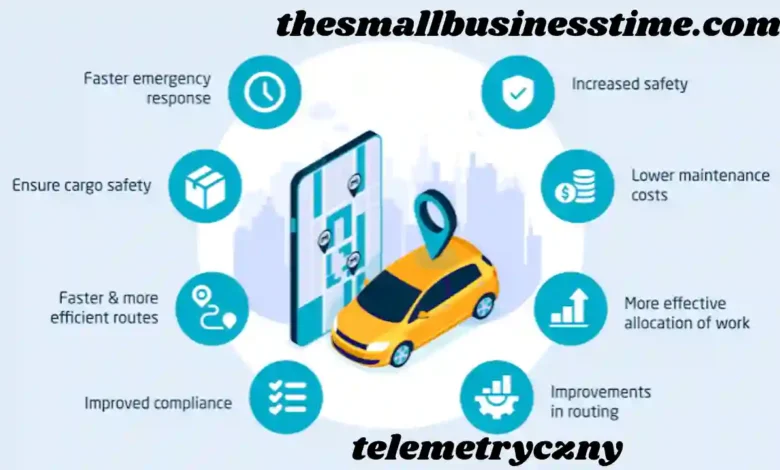
Transportation systems generate large amounts of information. Vehicles, trains, aircraft, and commercial fleets can use telemetry to monitor performance and operational conditions.
In vehicles, telemetric equipment may collect information about engine temperature, fuel consumption, speed, battery condition, location, and mechanical performance.
Fleet operators can use this information to understand vehicle usage, improve maintenance planning, and identify unusual operating conditions. Instead of waiting for a driver to report a problem, a monitoring platform may identify warning signs earlier.
In aviation, telemetry plays an important role in transmitting information about aircraft systems and flight operations. Aircraft generate numerous measurements that engineers and specialists use to evaluate performance and safety.
Railway operators can also use monitoring systems to examine equipment conditions, operating performance, and infrastructure-related measurements.
Telemetryczny Applications in Industrial Manufacturing
Manufacturing facilities depend on machines that must operate efficiently and consistently. Equipment failure can interrupt production, increase expenses, and create operational difficulties.
Telemetry helps manufacturers monitor machinery by collecting information about temperature, pressure, vibration, electricity consumption, and operating conditions.
For example, a factory may install vibration sensors on industrial motors. If the vibration pattern changes significantly, maintenance personnel can investigate the equipment before a serious mechanical problem develops.
This approach is associated with predictive maintenance. Rather than following only a fixed maintenance schedule, organisations can use equipment measurements to identify potential maintenance requirements.
Telemetry can also help production managers understand machine performance, identify repeated interruptions, and compare operating conditions across different production areas.
Telemetryczny Systems in Agriculture
Modern agriculture increasingly uses connected technologies to improve the management of farms and agricultural resources.
Telemetry can support soil monitoring, irrigation management, greenhouse operations, weather observation, and agricultural machinery monitoring.
Soil sensors may measure moisture levels and transmit information to a central application. Farmers can use these readings to understand when particular areas require irrigation.
Greenhouse operators may monitor temperature, humidity, and environmental conditions remotely. If a reading moves outside a preferred range, the system can generate an alert.
Agricultural equipment can also use telemetry to report operating conditions, location, and maintenance information.
These applications can help farmers make more informed decisions, although the benefits depend on local conditions, equipment quality, network availability, and the accuracy of measurements.
Telemetryczny Technology in Energy Management
Energy companies and large buildings need reliable information about electricity generation, distribution, and consumption.
Telemetry can be used to monitor power equipment, electrical measurements, renewable energy installations, and energy distribution systems.
Solar installations, for example, can use monitoring equipment to report electricity production, inverter performance, temperature, and system status.
Wind energy installations may transmit measurements related to turbine operation, wind conditions, and mechanical performance.
Building management systems can also use telemetric information to examine electricity consumption and environmental conditions. This helps facility managers understand how energy is being used and identify opportunities for more efficient operation.
The Role of Telemetry in the Internet of Things
The Internet of Things, commonly known as IoT, describes networks of physical devices that can collect and exchange information through communication technologies.
Telemetry and IoT are closely connected, although they are not identical concepts. Telemetry focuses on collecting and transmitting measurements, while IoT covers a broader range of connected-device capabilities.
A smart home provides a straightforward example. Temperature sensors, security devices, smart meters, and connected appliances can communicate information to a central application.
A homeowner may check indoor temperature from a smartphone or receive a notification when a connected security sensor detects movement.
In industrial environments, IoT devices can collect measurements from hundreds of machines and transfer information to monitoring platforms.
Telemetry provides an important foundation for these systems because connected devices need reliable ways to communicate the information they collect.
As IoT adoption expands, telemetric technologies are expected to remain important in smart buildings, industrial automation, transportation, agriculture, and environmental monitoring.
Benefits of Using Telemetryczny Systems
One of the biggest advantages of telemetry is the ability to obtain information from remote locations. Organisations do not always need employees to visit every machine, building, or monitoring station to collect measurements.
Remote monitoring can also improve the speed of information collection. When systems transmit measurements automatically, users can receive updated information more frequently than they might through manual inspection.
Another advantage is improved operational visibility. Managers and engineers can examine information from multiple locations through a central platform. This can make it easier to identify patterns, compare performance, and investigate unusual conditions.
Telemetry may also support preventive and predictive maintenance. By monitoring equipment measurements, organisations can identify potential warning signs and investigate problems before they lead to major interruptions.
Data storage is another important benefit. Historical measurements can help businesses understand long-term performance, identify seasonal changes, and evaluate the results of operational improvements.
Furthermore, telemetry can support better resource management. Organisations may use collected information to monitor energy consumption, water usage, fuel efficiency, and equipment utilisation.
The actual benefits depend on how effectively a system is designed and implemented. Accurate sensors, suitable communication networks, reliable software, and appropriate data analysis are all necessary.
Challenges and Limitations of Telemetryczny Technology
Although telemetry provides many advantages, it also introduces technical and operational challenges.
Network Connectivity Problems
Remote monitoring depends on communication infrastructure. Locations with poor internet coverage, weak cellular signals, or limited network access may experience transmission delays or interruptions.
This can be particularly challenging in rural areas, remote industrial facilities, underground installations, and locations where satellite communication is required.
Data Security and Privacy
Telemetry systems can collect sensitive operational, personal, or business information. If this information is not protected properly, it may become vulnerable to unauthorised access.
Organisations should use suitable security measures, including encryption, access controls, secure authentication, software updates, and appropriate data retention policies.
Healthcare and transportation applications may require additional safeguards because their information can involve sensitive personal or safety-related details.
Equipment Costs
Installing a telemetric system may require sensors, controllers, communication devices, software, installation services, and ongoing maintenance.
Small businesses may find the initial investment difficult, particularly when monitoring equipment across several locations.
However, the overall cost should be evaluated against potential operational benefits rather than considering equipment prices alone.
Measurement Accuracy
Telemetry cannot provide useful information if its measurements are inaccurate. Sensors may require calibration, replacement, or environmental protection.
Incorrect sensor placement can also produce misleading results. A temperature sensor installed in an unsuitable position may not represent the actual operating temperature of an entire machine or room.
System Maintenance
Telemetric equipment requires regular maintenance. Batteries may need replacement, communication modules may require updates, and software platforms must remain compatible with changing technologies.
Organisations should consider these responsibilities before installing a large monitoring system.
Telemetryczny Technology and Data Analysis
Collecting measurements is only one part of a successful telemetry solution. The information must also be organised and analysed to produce meaningful results.
Raw measurements can contain thousands or even millions of individual readings. Without suitable analysis, it may be difficult for users to identify important changes.
Data analysis tools help convert measurements into understandable information. Charts can show how temperature changes over time, while performance reports can compare equipment operating conditions.
Historical analysis can help identify patterns that may not be visible through individual readings. For example, a machine may experience increasing vibration over several weeks. Examining the historical measurements can reveal a gradual change that deserves investigation.
Some advanced systems also use artificial intelligence and machine learning to identify unusual patterns. These technologies can help organisations detect possible equipment problems or analyse complex datasets.
However, automated analysis should not be treated as automatically correct. Models require suitable training data, regular evaluation, and human oversight, particularly in situations involving safety or important operational decisions.
Differences Between Telemetry, Remote Monitoring, and Data Logging
Telemetry, remote monitoring, and data logging are closely related terms, but they describe different aspects of information management.
Telemetry refers primarily to measuring information and transmitting it from one location to another.
Remote monitoring describes the broader activity of observing equipment, systems, or conditions from a different location. It may use telemetry as its underlying data source.
Data logging refers to recording measurements over time. A data logger may store information locally, even when it does not immediately transmit that information to another location.
For example, a temperature monitoring device may record readings inside its memory. This is data logging. If it sends those readings to a remote computer, it is also using telemetry. When an engineer checks the information from another location, that activity becomes remote monitoring.
Understanding these differences is useful when selecting equipment or planning a monitoring project.
Choosing the Right Telemetryczny System
Selecting an appropriate telemetric solution requires understanding the actual monitoring requirements.
The first consideration should be the type of information that needs to be collected. Temperature monitoring requires different sensors from vehicle tracking, industrial vibration measurement, or electricity monitoring.
The operating environment is another important factor. Equipment installed inside a clean office may have different requirements from devices used in outdoor locations, factories, agricultural fields, or vehicles.
Communication coverage should also be evaluated. Wi-Fi may be suitable for a building, while cellular or satellite connections may be more practical for remote installations.
Data frequency is equally important. Some applications require frequent measurements and low transmission delays, whereas others can operate with occasional updates.
Security should be included in the selection process. Users should understand where information is stored, who can access it, and what protections are available.
Finally, organisations should consider compatibility, maintenance requirements, technical support, and long-term operating costs. A suitable system should meet present requirements while allowing reasonable future expansion.
The Future of Telemetryczny Technology
The future of telemetry is closely connected to developments in artificial intelligence, wireless communication, cloud computing, edge computing, and connected devices.
As sensors become smaller and more affordable, telemetric systems may become practical for an increasing number of applications. More devices will be able to collect information and communicate measurements without requiring complex infrastructure.
Artificial intelligence may also improve how telemetry information is analysed. Advanced systems can examine historical patterns, identify unusual behaviour, and support predictive maintenance.
Edge computing is another important development. Instead of sending every measurement to a distant server for processing, some systems can analyse information close to where it is collected. This can reduce communication requirements and support faster responses.
Faster communication networks may also improve applications that require frequent updates. Industrial automation, connected transportation, and remote equipment management can benefit from more reliable data transmission.
Environmental monitoring is another area with significant potential. Connected sensors can help researchers examine air quality, water conditions, weather patterns, and other environmental measurements.
Nevertheless, future progress will depend on more than technological improvements. Security, interoperability, affordability, reliability, and responsible data management will remain important considerations.
Why Telemetryczny Matters in Everyday Life
Many people use telemetry-related technologies without recognising the technical term behind them.
A connected smartwatch may transmit health measurements to a smartphone. A vehicle tracking application may display the location of a car. A smart electricity meter may communicate consumption information to an energy provider.
Weather stations can send environmental measurements to forecasting systems, while connected home devices can report temperature and security conditions.
These examples demonstrate that telemetry is not restricted to engineers, scientists, or large industrial organisations. It is increasingly connected to everyday digital experiences.
The technology helps bridge the gap between physical activities and digital information. Measurements collected by real-world devices become available through applications, dashboards, and online platforms.
As connected technology becomes more common, understanding telemetry will help people recognise how modern monitoring systems operate and why reliable data communication matters.
Conclusion: The Growing Importance of Telemetryczny Systems
Telemetryczny is a technical term associated with telemetry and the remote measurement and transmission of information. Although the word may initially appear specialised, the technology it represents has applications across healthcare, transportation, manufacturing, agriculture, energy, telecommunications, and everyday connected devices.
A telemetric system brings together sensors, data acquisition equipment, communication networks, processing hardware, and software. These components work together to collect measurements and make them available for remote observation and analysis.