Mikki Moore – Basketball Career, NBA Journey, and Legacy
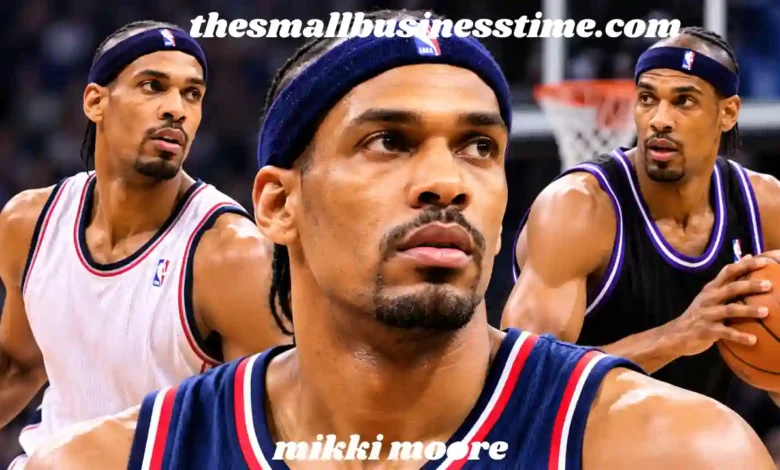
Mikki Moore is a name familiar to basketball fans who followed the NBA during the late 1990s and 2000s, particularly those who appreciated hardworking centers who built long professional careers through determination, adaptability, and defensive ability. Born Clinton Renard Moore on November 4, 1975, in Orangeburg, South Carolina, Mikki Moore developed from a talented college basketball player into a professional center who competed across the NBA, international basketball, and developmental leagues. His career is particularly interesting because he was not a highly touted NBA draft selection. Instead, he went undrafted and had to establish himself through persistence and strong performances at different levels of professional basketball.
Standing around seven feet tall, Moore possessed the physical size expected from a traditional center. However, his career was about much more than height. His ability to rebound, defend around the basket, finish efficiently, and provide a dependable interior presence helped him remain in professional basketball for many years. He eventually played for nine NBA franchises and also competed in other professional leagues. His journey demonstrates how an athlete can overcome an uncertain beginning and create a meaningful professional career through consistency and opportunity.
Mikki Moore Early Life and Basketball Background
Mikki Moore was raised in South Carolina, a state with a strong basketball tradition and a history of producing talented players. He attended Blacksburg High School in Blacksburg, South Carolina, where his size and athletic abilities helped establish his basketball potential. For a young player standing close to seven feet tall, basketball naturally offered an opportunity to develop skills that could eventually take him to the college and professional levels.
Moore’s physical profile immediately made him an intriguing prospect. At approximately seven feet tall and weighing around 225 pounds during his professional career, he had the dimensions to compete against larger opponents. But size alone does not guarantee a successful basketball career. Moore had to develop his positioning, footwork, rebounding technique, defensive awareness, and offensive efficiency.
His high school career eventually led him to the University of Nebraska, where he became an important part of the Cornhuskers basketball program. College basketball gave Moore the opportunity to compete against stronger and more experienced opponents while developing the skills that would later become important during his professional career.
His story is also an example of why the path from high school basketball to professional basketball is rarely straightforward. Some players receive major national attention from the beginning, while others gradually build their reputation. Moore followed the latter path. His college career became an important foundation for what came next.
Mikki Moore at the University of Nebraska
Mikki Moore played college basketball at the University of Nebraska from 1993 through 1997. During his four seasons with the Cornhuskers, he developed into a productive interior player and became particularly recognized for his shot-blocking ability.
Across his Nebraska career, Moore averaged approximately 8.6 points and 5.8 rebounds per game while playing significant minutes. One of his most notable achievements was his performance as a shot blocker. He finished his Nebraska career with 236 blocked shots, placing him among the school’s all-time leaders in that category.
His senior season was especially important. During the 1996–97 campaign, Moore averaged approximately 11.7 points and 7.4 rebounds per game. He was one of Nebraska’s leading scorers and rebounders and earned honorable-mention recognition within the conference.
Moore’s college career also included an important team achievement. During the 1995–96 season, Nebraska won the National Invitation Tournament championship, giving the program a significant postseason accomplishment. Moore contributed during that tournament and was particularly productive on the glass.
The NIT championship was meaningful not only for Nebraska but also for Moore’s development as a player. Winning a postseason tournament provided experience in high-pressure games and demonstrated that he could contribute when the stakes were higher.
Another memorable part of Moore’s college career was his shot-blocking performance. He recorded nine blocks in a game against Coppin State, a mark that became part of Nebraska’s basketball history. His defensive instincts around the basket were one of the qualities that continued to define him as he moved toward professional basketball.
Mikki Moore and the Challenge of Going Undrafted
Despite his strong college career and impressive physical attributes, Mikki Moore was not selected in the 1997 NBA Draft. Going undrafted can be a major setback for a basketball player who has spent years working toward a professional career.
For Moore, however, going undrafted did not mean the end of his professional ambitions. Instead, it became the beginning of a much more unconventional basketball journey.
Undrafted players frequently have to work harder to receive opportunities. They may begin in developmental leagues, international competitions, summer leagues, or training camps before receiving a sustained NBA opportunity. Moore followed this type of route, demonstrating that a player’s career cannot always be judged by draft position.
His professional journey began with the Fort Wayne Fury and included a stint overseas with Papagou in Greece. These experiences gave him additional opportunities to develop professionally and prove that he could compete outside the college environment.
Rather than allowing the lack of a draft selection to define his career, Moore continued pursuing opportunities. His persistence eventually resulted in an NBA opportunity with the Detroit Pistons.
Mikki Moore and the Detroit Pistons
The Detroit Pistons became one of the first NBA organizations to provide Moore with a meaningful professional opportunity. His early NBA career was a period of adjustment as he transitioned from college and developmental basketball to the much more demanding NBA environment.
The NBA required Moore to compete against some of the best centers and forwards in the world. Every possession demanded greater physical strength, faster decision-making, and more sophisticated defensive positioning.
During his time with Detroit, Moore gradually gained experience. He learned how to use his size effectively without relying solely on physical advantages. His ability to finish close to the basket and contribute defensively helped him establish himself as a useful frontcourt player.
The early years of Moore’s career also demonstrated an important characteristic that would remain relevant throughout his professional journey: adaptability. He did not always receive major minutes, but he continued to prepare and take advantage of opportunities when they appeared.
Mikki Moore and His Development Outside the NBA
One of the most interesting aspects of Mikki Moore’s career is the amount of professional basketball he played outside the NBA.
He spent time in leagues such as the Continental Basketball Association and the NBA Development League, which gave him additional opportunities to demonstrate his abilities. These experiences were particularly valuable because they allowed him to take on larger roles and develop confidence.
In 1999, Moore earned All-CBA recognition, including First Team and All-Defensive Team honors. These achievements showed that he could have a significant impact when given an expanded role.
His time with the Roanoke Dazzle was also especially important. In the 2002–03 season, Moore became one of the standout players in the NBA Development League. He earned All-NBDL First Team honors and was named the league’s Defensive Player of the Year.
These accomplishments were important milestones in his career because they helped keep his professional prospects alive. Instead of being forgotten after going undrafted, Moore continued to improve and prove himself at every level.
His career provides an important lesson for young athletes: a difficult beginning does not necessarily determine the final outcome.
Mikki Moore and the New Jersey Nets
One of the biggest turning points in Mikki Moore’s NBA career came when he joined the New Jersey Nets.
The 2006–07 season became the most statistically notable NBA campaign of his career. An injury to Nenad Krstić created an opportunity for Moore to receive increased playing time, and he responded with one of the strongest seasons of his professional career.
Moore averaged approximately 9.8 points and 5.1 rebounds per game that season. More importantly, he shot an extremely efficient percentage from the field, finishing the season as the NBA leader in field-goal percentage.
That achievement was particularly notable because Moore was an undrafted player who had spent years working his way through different leagues and teams. His efficiency made him an important part of the Nets’ frontcourt.
The season illustrated how preparation and persistence can eventually meet opportunity. Moore had spent years moving between teams and leagues, but when a larger role became available, he was ready to take advantage of it.
His performance with New Jersey remains one of the defining chapters of the Mikki Moore story.
Mikki Moore and the Sacramento Kings
Following his successful season with the Nets, Moore signed with the Sacramento Kings in 2007.
The move represented another major step in his NBA journey. Sacramento saw value in Moore’s size, efficiency, experience, and ability to contribute around the basket.
Moore spent the 2007–08 and part of the 2008–09 period with Sacramento. During this stage of his career, he had already established himself as a veteran NBA center who could provide dependable minutes and interior play.
His Sacramento period also occurred at a time when NBA teams were increasingly evaluating how centers could contribute within changing offensive systems. Moore was not primarily known as a high-volume scorer or perimeter shooter. Instead, his value came from efficiency, positioning, rebounding, and interior defense.
His ability to remain productive despite changing teams throughout his career demonstrated his adaptability as a professional.
Mikki Moore and the Boston Celtics
Mikki Moore also had two separate periods with the Boston Celtics. One came earlier in his professional career, while another occurred in 2009.
His 2009 return to Boston came after he was waived by Sacramento. Joining a championship-caliber organization placed him in a different environment, where veteran experience and role acceptance were particularly important.
For a player like Moore, success did not necessarily mean being the team’s leading scorer. His role was about providing frontcourt depth, size, and experience.
Playing for established organizations such as Boston was another indication that teams valued the qualities he brought despite his unconventional career path.
Mikki Moore and the Golden State Warriors
Another notable chapter in Moore’s career came with the Golden State Warriors.
Moore signed with Golden State in 2009. His time with the Warriors demonstrated how his career continued well beyond his best statistical season with New Jersey.
Injuries and roster changes affected his later career, including a heel injury that required surgery during his Warriors tenure. Such physical challenges are common in professional basketball, particularly for players who have spent many years competing at a high level.
Despite those challenges, Moore continued looking for opportunities to remain in professional basketball.
He later returned to the Warriors during the 2011–12 season after spending time with other organizations. His return illustrated the value of familiarity and experience in professional sports.
Mikki Moore’s Later Professional Career
Mikki Moore’s professional journey continued after his major NBA years.
He spent time with the Memphis Grizzlies, Idaho Stampede, Golden State Warriors, Philadelphia 76ers, and Reno Bighorns during the later stages of his career. Some of these opportunities were brief, while others allowed him to continue competing at a professional level.
By this point, Moore had already achieved something that many professional basketball players never accomplish: a long career spanning more than a decade.
His playing career ultimately extended from the late 1990s into 2013. Across those years, he experienced the highs and lows of professional basketball, including roster changes, injuries, developmental leagues, international competition, and NBA opportunities.
The fact that he continued competing for so long is itself a major part of his legacy.
Mikki Moore NBA Career Statistics
When examining Mikki Moore’s career statistically, his numbers reflect the role he generally played.
He appeared in 564 regular-season NBA games and averaged approximately 5.8 points, 3.9 rebounds, and 0.7 assists per game. His career field-goal percentage was around 55 percent.
These numbers need to be understood within the context of his role. Moore was primarily an interior player rather than a high-volume offensive centerpiece. His job was often to provide efficient scoring opportunities around the basket, rebound, defend, set screens, and contribute physical presence.
His career field-goal percentage is particularly notable. Efficient finishing was one of his strengths, and his 2006–07 season with New Jersey demonstrated just how effective he could be when given a larger role.
Rather than judging Moore solely by scoring averages, his career is better understood through his efficiency, longevity, defensive abilities, and capacity to fill a specific role for numerous teams.
Mikki Moore’s Playing Style
Mikki Moore’s playing style was shaped by his size and interior skills.
As a seven-foot center, he naturally operated around the basket. He could finish close-range opportunities and use his height to challenge opposing players defensively.
Shot blocking was an important part of his identity, particularly during his college years. His 236 career blocks at Nebraska remain a major part of his collegiate legacy.
Rebounding was another important component of his game. Moore’s size allowed him to compete effectively for missed shots, while his experience helped him understand positioning.
Offensively, efficiency was one of his biggest strengths. Rather than taking large numbers of difficult shots, he often relied on opportunities near the basket.
His playing style reflected an era when traditional centers still had important roles in NBA rotations. Although the league eventually moved toward greater emphasis on perimeter shooting and positionless basketball, Moore’s interior skill set allowed him to remain useful throughout his career.
What Made Mikki Moore’s Career Unique?
There are several reasons the career of Mikki Moore stands out.
First, he went undrafted. Many players who are not selected in the NBA Draft never reach a long-term professional career. Moore not only reached the NBA but played for nine NBA teams.
Second, he demonstrated longevity. His professional career lasted roughly 16 years from his first professional opportunities in 1997 until his final playing experiences in 2013.
Third, he succeeded in multiple basketball environments. Moore played in the NBA, developmental leagues, international basketball, and other professional competitions.
Fourth, he was able to transform an opportunity into one of the strongest seasons of his NBA career. His 2006–07 campaign with the New Jersey Nets was a particularly important example.
Finally, his career demonstrates the importance of persistence. Moore’s journey was not built around being a highly selected prospect. Instead, it was built through continued work and the ability to seize opportunities.
Mikki Moore’s Legacy in Basketball
The legacy of Mikki Moore is not necessarily defined by All-Star appearances or enormous scoring statistics. Instead, his legacy comes from the path he took to become a long-term professional.
His journey is valuable because it shows how basketball careers can develop in unexpected ways. An undrafted college player can eventually become an important NBA contributor. A player who spends time in developmental leagues can return to the NBA and earn a significant role. A career that begins without major attention can ultimately span many years.
For Nebraska basketball, Moore remains remembered as a productive center and one of the program’s notable shot blockers. His 236 career blocks remain an important part of his college record.
For NBA fans, his 2006–07 season with the New Jersey Nets stands out as perhaps the most recognizable period of his professional career. Leading the league in field-goal percentage as an undrafted player was a remarkable accomplishment.
His long list of teams also reflects his versatility and resilience. Few professional basketball players experience such a wide range of organizations and leagues.
Lessons From Mikki Moore’s Basketball Journey
There are several lessons that can be taken from Mikki Moore’s career.
One is that rejection does not have to be permanent. Going undrafted could easily have ended his NBA aspirations, but Moore continued playing and eventually established himself.
Another lesson is the importance of preparation. When an opportunity came with the New Jersey Nets, Moore was prepared to handle increased responsibility.
His career also demonstrates the importance of adaptability. Professional sports can involve trades, injuries, roster changes, coaching changes, and changing roles. Players who adapt are more likely to continue finding opportunities.
Moore’s career also illustrates the value of specialization. He did not need to become a superstar scorer to have a successful professional career. His size, rebounding, interior finishing, defense, and efficiency provided a useful combination.
Most importantly, his career demonstrates persistence. Remaining in professional basketball for more than a decade requires physical preparation, mental toughness, and the willingness to continue working even when circumstances are uncertain.
Why Fans Still Search for Mikki Moore
Interest in Mikki Moore continues partly because his career represents an unusual NBA story.
Basketball fans often remember famous stars, championship teams, and high-scoring players. However, players such as Moore are also important to the history of the sport because they represent the countless professionals who contribute to teams without becoming household names.
Searching for Mikki Moore often leads fans to discover his impressive journey from Nebraska to professional basketball, his undrafted status, his developmental-league success, his NBA opportunities, and his standout season with New Jersey.
His story is particularly interesting for younger basketball players who may be facing uncertainty about their own futures. Moore’s career shows that not being selected early does not automatically mean that a player’s basketball journey is over.
Final Thoughts on Mikki Moore
Mikki Moore built a professional basketball career through persistence, adaptability, and an ability to make the most of opportunities. From his early days in South Carolina to his college career at Nebraska, from going undrafted to competing professionally overseas and in developmental leagues, and from earning NBA opportunities to producing one of his best seasons with the New Jersey Nets, his journey contains many important chapters.
His career was not a traditional rise from highly ranked prospect to superstar. Instead, it was a gradual climb in which each opportunity helped create the next one. He played for numerous NBA organizations, experienced different professional basketball environments, and remained active in the sport for many years.
For fans researching mikki moore, his story provides a fascinating look at the less predictable side of professional basketball. His career demonstrates that success can take different forms. For some players, success means becoming an NBA superstar. For others, it means surviving and competing at the highest level for more than a decade.
Mikki Moore belongs to the second category. His achievements at Nebraska, his defensive reputation, his NBA journey, his outstanding efficiency during his New Jersey season, and his remarkable professional longevity all contribute to a basketball story worth remembering.
ALSO READ : BowlsNet UK – Complete Guide to Results, Fixtures and Bowling Leagues