Luke Tryl: Career, Public Opinion Research, More in Common and Political Analysis
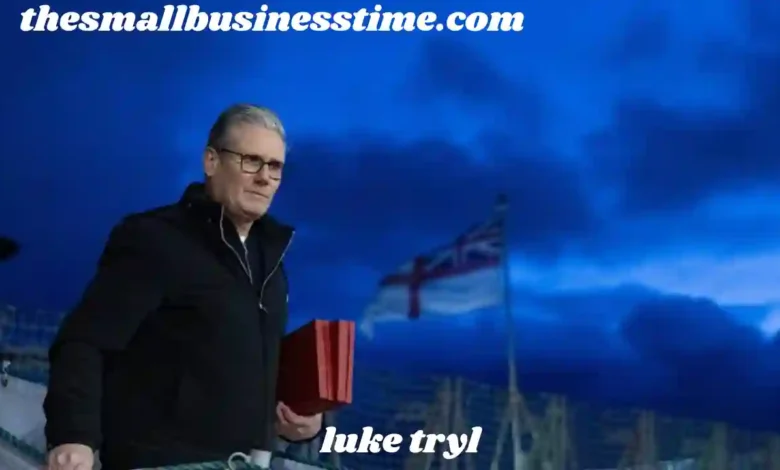
Who Is Luke Tryl?
Luke Tryl is a British public opinion researcher, political commentator and senior figure at More in Common, where he has focused extensively on understanding how people across the United Kingdom think about politics, society and major public issues. His work has involved polling, focus groups, research reports and media commentary, giving him a role that sits between quantitative public opinion research and qualitative understanding of voters’ experiences. More in Common describes his work as covering subjects including immigration, climate change, gender identity, social cohesion and other issues that can generate significant public debate.
Tryl has become particularly visible through his work explaining polling and public attitudes. Rather than focusing exclusively on headline voting-intention numbers, much of his professional work examines the reasons behind those numbers and the differences between groups of voters. This approach is important because a national polling figure can conceal significant differences between age groups, regions, social backgrounds and political identities. His appearances in British media have therefore often involved discussing not only what people say they support, but also the concerns and experiences that may influence those views.
His position at More in Common has also placed him in an organisation whose research agenda is strongly connected to social cohesion and public understanding. The organisation was established following the murder of Labour MP Jo Cox and has developed research examining divisions within British society and opportunities for finding common ground. Tryl’s role has involved contributing to that broader research programme while communicating findings to journalists, policymakers and the wider public.
Luke Tryl and More in Common
More in Common has become an increasingly recognised name in British public opinion research, particularly for its combination of polling and focus-group research. Luke Tryl is one of the organisation’s most prominent UK figures. Current professional profiles identify him as Executive Director, while More in Common material and recent media coverage have also referred to him as its UK Director.
The organisation’s research model is useful for understanding why Tryl’s work attracts attention. Traditional polling can establish how many people hold a particular view, but it does not always explain the emotional, economic or social reasons behind that view. Focus groups can provide additional context by allowing researchers to hear people explain their concerns in their own words. Tryl has frequently been involved in this type of research, travelling to different parts of Britain and speaking with people from different backgrounds.
This combination became particularly visible during the 2024 general election period. More in Common’s post-election work involving Tryl examined the election through polling and extensive focus-group research. The organisation reported using research involving more than 10,000 people shortly after the election and more than 60 focus groups during and after the campaign.
The purpose of this research was not simply to identify which party received the most votes. It also examined what voters meant when they talked about change, public services and the relationship between politicians and the public. This illustrates an important characteristic of Tryl’s professional work: interpreting political developments through public attitudes rather than treating election results as isolated events.
Luke Tryl’s Earlier Government Experience
Before becoming a leading figure at More in Common, Luke Tryl worked in British government and public administration. According to his professional biography for Public Finance Live, he served as a Special Adviser to Nicky Morgan, who was Secretary of State for Education during the David Cameron administration. He later became Director of Strategy at Ofsted, the Office for Standards in Education, Children’s Services and Skills.
These experiences provided him with exposure to both political decision-making and public-sector administration. Working as a special adviser involves supporting ministers with political, policy and strategic work, while a senior strategy role within an organisation such as Ofsted involves a different institutional perspective.
His subsequent move into public opinion research therefore brought together several different areas of experience. His background includes government, education policy, public administration, research and political communication. That combination helps explain why he is often invited to discuss the relationship between public opinion and government policy.
Tryl’s career also demonstrates how people working in politics can move between government, research organisations and media commentary. His professional work today is substantially focused on understanding public attitudes, but his earlier positions gave him experience of how institutions and policymakers operate.
Luke Tryl and Political Polling
Polling is one of the areas most closely associated with Luke Tryl’s public profile. Through More in Common, he has participated in research examining voting intentions, political attitudes and public reactions to major issues. The organisation regularly publishes polling and analysis concerning Britain’s changing political landscape.
An important part of understanding Tryl’s work is recognising the distinction between polling and prediction. Polling measures attitudes among a sample of people at a particular point in time. It does not guarantee what will happen at a future election. A poll can change as public opinion changes, and different polling methodologies can produce different results.
Tryl has discussed these limitations publicly. In September 2026, reporting about political polling included comments from him concerning how polling organisations work with political parties and how some commissioned research may not necessarily be published.
This wider debate highlights why polling should normally be interpreted alongside methodology, sample size, fieldwork dates and the precise question asked. A headline percentage without this context can easily be misunderstood. Tryl’s role has frequently involved adding that context to polling discussions.
Luke Tryl and the 2024 General Election
The 2024 UK general election was a major focus of More in Common’s research. Luke Tryl presented the organisation’s post-election analysis in a webinar held in July 2024. The presentation examined what happened during the election and how voter attitudes contributed to the result.
More in Common’s research around the election attempted to look beyond the simple change in party vote shares. The organisation studied different groups of voters and their motivations, including attitudes towards public services and expectations of political change.
Tryl’s analysis has frequently emphasised that Britain’s electorate cannot easily be divided into a few simple categories. Voters can hold combinations of views that do not fit neatly into conventional left-right political descriptions. Someone might support greater government spending in one area while favouring tighter immigration rules, for example.
This complexity is one reason focus groups can complement polling. A questionnaire can record a response, while a conversation can reveal how a person arrived at that response and what other concerns influence it.
Luke Tryl and Public Opinion Research
Public opinion research is broader than asking people which political party they intend to support. It can cover attitudes toward government institutions, public services, immigration, climate policy, education, social issues, national identity and many other subjects.
Tryl’s work at More in Common has covered a wide range of these topics. His professional biography specifically identifies immigration, climate change, gender identity and mental health among the areas examined by his organisation’s UK public opinion work.
One recurring theme in this type of research is that public opinion can be more complicated than political debate suggests. Social-media conversations can sometimes make an issue appear completely polarised, while wider surveys and conversations with members of the public can reveal a greater range of opinions.
Tryl has written about this distinction in relation to debates over transgender issues. In a 2022 article, he discussed More in Common research involving polling and conversations with people around Britain and argued that everyday public attitudes were more nuanced than highly confrontational online debates might suggest.
That example illustrates the broader purpose of public opinion research: identifying what people actually think rather than assuming that the loudest voices in a political debate represent the entire population.
Luke Tryl and Focus Groups
Focus groups are another important part of Tryl’s research approach. In a focus group, researchers bring together a selected group of people and encourage them to discuss an issue. Researchers can then examine the language people use, the concerns they raise and how their opinions develop during discussion.
Tryl has described spending substantial amounts of time conducting and chairing focus groups. A 2026 interview with Public Finance described him moving between focus groups as part of his work and emphasised his organisation’s focus on the complexity of British public opinion.
The geographical element is also significant. Britain’s political attitudes vary considerably between different communities. Researchers can therefore learn more by speaking with people in different locations rather than assuming that national averages tell the whole story.
Focus groups do not replace representative polling. They serve a different purpose. Polling can estimate how widespread a particular view is, while focus groups can help researchers understand how people explain that view.
Luke Tryl and the Idea of a Social Contract
Another recurring subject in Tryl’s recent work has been the relationship between citizens and institutions. More in Common has examined whether people believe the existing social contract is working and what they expect from government and society.
In 2026, Tryl participated in the first episode of More in Common’s Opinion Brief podcast, which examined whether a perceived “broken social contract” was contributing to support for Reform UK and the Green Party. The discussion used polling and other research to examine changing political attitudes in Britain.
The social-contract concept is broader than party politics. It concerns expectations about what citizens should contribute to society and what they should receive from institutions. Questions about public services, taxation, responsibilities, economic opportunity and political accountability can all become part of this discussion.
Tryl’s research in this area has attempted to understand why people may feel dissatisfied with established political arrangements. This is particularly relevant in periods when voters are considering alternatives to traditional political parties.
Luke Tryl and Britain’s Changing Political Landscape
British politics has undergone significant changes in recent years, with traditional party loyalties becoming less predictable. Tryl’s work has involved analysing these changes through polling and focus groups.
More in Common’s research has examined support for established parties as well as newer political movements. Its work has also looked at how voters move between parties and how attitudes toward political leaders and institutions can change over time.
A major feature of contemporary British politics is that voters can be less permanently attached to one party than in previous generations. Economic circumstances, local issues, leadership perceptions and specific policy questions can all influence political choices.
Tryl’s research frequently explores these shifts rather than treating the electorate as permanently divided into fixed groups. This makes voter segmentation an important part of the research produced by More in Common.
Luke Tryl and Seven-Segment Analysis
One example of this approach is More in Common’s use of voter segmentation. Tryl has discussed the organisation’s “Seven Segments” framework when analysing voting behaviour.
The idea behind segmentation is that voters who support the same political party may nevertheless have very different reasons for doing so. Conversely, people who support different parties may share concerns about particular issues.
In discussions around the 2024 election, Tryl examined changes among different segments of the electorate rather than simply comparing overall party support. His published commentary discussed groups such as Progressive Activists and Civic Pragmatists and examined how their political preferences had changed.
This type of analysis can be especially useful for journalists and researchers because it provides a more detailed picture of an electorate. It also demonstrates why national vote shares alone cannot explain every change taking place in British politics.
Luke Tryl in the Media
Luke Tryl is a regular media commentator on British politics and public opinion. His profile includes appearances and contributions involving publications and broadcasters such as the Guardian and other major UK media outlets. Public Finance describes him as a regular media commentator who has appeared on BBC radio and television and written for publications including the Times, Telegraph, Guardian, New Statesman and Spectator.
The Guardian maintains a profile page for Tryl containing his articles and appearances. Its archive includes work covering public attitudes, elections, political parties and social issues.
Media commentary gives polling organisations an opportunity to explain research to a much larger audience. However, it also means that complicated findings sometimes have to be communicated in a short television segment, article or interview.
For that reason, readers interested in Tryl’s work should distinguish between his direct research findings and the way those findings are summarised by journalists or commentators.
Luke Tryl and Universities
Tryl has also participated in academic and university discussions about public opinion and social cohesion. In November 2025, he took part in an “In Conversation” event at the University of Sussex, discussing public opinion and research conducted by More in Common. The event included discussion of the organisation’s “Shattered Britain” research and attitudes toward universities and equality, diversity and inclusion work.
Such events show another aspect of his public role. His work is not limited to election coverage. It also involves discussions about institutions, communities and the factors shaping social attitudes.
Universities can be important settings for this kind of discussion because researchers and students often approach public opinion from different perspectives. Presenting polling and focus-group findings in such environments allows questions about methodology and interpretation to receive greater attention.
Luke Tryl and Democratic Research
Tryl has also contributed to research examining democracy itself. A More in Common report titled “Democratic Repair: What Britons Want from Their Democracy” lists Luke Tryl among its authors alongside Conleth Burns, Tim Dixon and Míriam Juan-Torres.
Research into democratic attitudes goes beyond elections. It can involve questions about trust, representation, institutions, participation and people’s relationship with political systems.
This area connects closely with the wider themes of Tryl’s career. Whether he is examining voting behaviour, social issues or attitudes toward institutions, much of his work is concerned with understanding how people experience the political and social system around them.
Luke Tryl’s Approach to Complex Issues
A defining feature of Tryl’s public research work is the attempt to explore complexity. Topics such as immigration, gender identity, climate change and political identity can produce highly visible disagreements. Yet disagreement does not necessarily mean that every person holds an extreme position.
Public opinion research can reveal people who have mixed views, uncertain views or opinions that change depending on how a question is presented. These nuances matter when interpreting political developments.
Tryl’s work therefore provides an example of how polling and qualitative research can be used together. Statistics can reveal patterns, while conversations can help explain them.
This approach is particularly relevant in an era when social-media discussions can amplify highly partisan voices. Researchers who speak with people outside online political communities may encounter a broader range of perspectives.
Luke Tryl’s Recent Work in 2026
During 2026, Tryl has remained active in More in Common’s UK research and public commentary. More in Common’s recent material includes his involvement in research concerning changing party support, public services, social care, immigration and the UK’s evolving political landscape.
In April 2026, he appeared in the first episode of More in Common’s Opinion Brief podcast, discussing research on the social contract and the changing political landscape.
Recent public appearances also demonstrate how his role has expanded beyond conventional polling commentary. His work now includes explaining broader trends in British society and how voters understand political institutions and public services.
Because political opinion changes quickly, individual polls should be understood as snapshots rather than permanent descriptions of the electorate. This is particularly important when looking at Tryl’s 2026 work, where party support and political debates have been changing over relatively short periods.
Luke Tryl’s Career in Perspective
Luke Tryl’s professional career combines several areas that are closely connected: government, public administration, polling, focus groups, journalism and public-policy research.
His earlier work as a government special adviser gave him experience within the political system. His role at Ofsted provided experience of public administration and strategy. His later work at More in Common shifted the emphasis toward understanding citizens’ views and communicating research about British society.
This combination has made him a recognisable commentator on public opinion. His work is particularly relevant to people interested in how polling connects with real-world experiences.
Rather than looking only at election results, his research frequently asks why people think the way they do, what they expect from institutions and how their views differ across communities.
Why Luke Tryl’s Work Attracts Attention
The continuing interest in Luke Tryl largely reflects the importance of public opinion research in modern British politics. Political parties, journalists, policymakers, researchers and members of the public all want to understand changing attitudes.
Polling provides one part of the picture. Focus groups provide another. Long-term research can show how opinions change over time. Media analysis can then bring those findings into wider public discussion.
Tryl’s work sits at the centre of these activities through More in Common. His career has involved examining both political preferences and broader social questions, making his work relevant beyond individual elections.
His public profile also reflects the increasing importance of data-driven political analysis. In a political environment where public attitudes can shift quickly, researchers are increasingly expected to explain not only what the numbers say but also what those numbers may mean.
Final Thoughts on Luke Tryl
Luke Tryl has developed a career focused on understanding British public opinion through polling, focus groups and wider research. As a senior figure at More in Common, he has contributed to research covering elections, political parties, public services, social cohesion and controversial social issues. His earlier experience as a government special adviser and Ofsted strategy director adds a public-policy dimension to his professional background.
His work demonstrates the value of looking beyond headline political numbers. Voters are not always motivated by a single issue, and people who share a political preference can have very different reasons for doing so. Research that combines quantitative polling with qualitative conversations can provide additional context for understanding these differences.
ALSO READ : Sumona Chatterjee: Biography, Career, Television Journey and Life Story