Wil Bakula: Music, Family, and Creative Journey
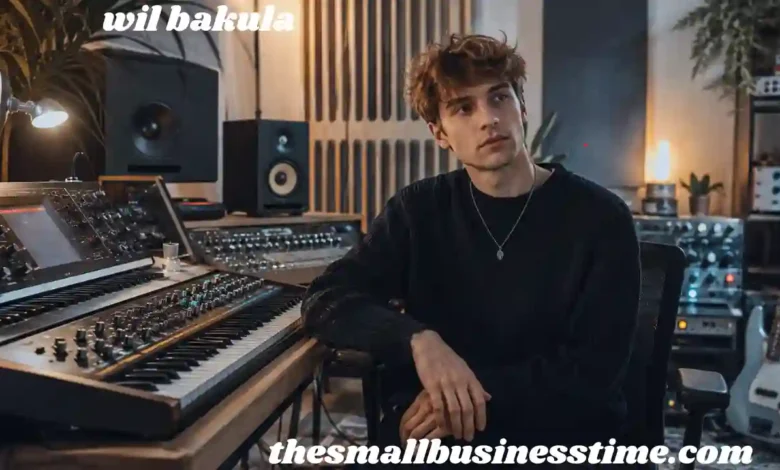
Wil Bakula is a name that often attracts attention because of his connection to a recognizable entertainment family, but his own story is increasingly associated with music rather than acting. He is publicly identified as the son of actor Scott Bakula and actress Chelsea Field. Instead of simply following his parents into television and film, Wil Bakula has developed a creative identity centered on songwriting, keyboards, synthesizers, production, and collaborative music projects. Scott Bakula’s publicly listed family information includes Wil among his children, while music platforms separately document Wil’s growing collection of performance, composition, and production credits.
That distinction is important when understanding Wil Bakula. Celebrity-family coverage can easily focus almost entirely on a famous parent, but Wil’s publicly documented work provides a much more useful picture. His credits with Chromatic Colors and foamboy show someone working across several parts of music creation. He has been credited with keyboards, piano, synthesizers, bass, drums, songwriting, mixing, and production at different stages of his career. These credits suggest that he is not merely connected to music through a famous surname; he has participated directly in creating and shaping recorded projects.
At the same time, Wil Bakula maintains a considerably lower public profile than his father. There is not an enormous amount of reliable information available about his private life, and many personal details circulated on celebrity-oriented websites are difficult to independently confirm. A responsible look at Wil Bakula therefore works best when it separates documented creative activity from speculation. His family connection is relevant, but his music offers a clearer and more substantial way to understand who he is publicly.
Who Is Wil Bakula?
Wil Bakula is an American musician and creative contributor who is widely recognized as one of the children of Scott Bakula and Chelsea Field. Scott Bakula is known for major television roles, including Quantum Leap, Star Trek: Enterprise, and NCIS: New Orleans. Chelsea Field has also built a long career as an actress. Because Wil grew up in a family connected to performance and entertainment, public curiosity about him developed naturally. However, his own professional direction appears to have moved primarily toward music rather than acting.
The available music credits help define Wil Bakula much more clearly. Earlier recordings from Chromatic Colors identify him as a multi-instrumentalist who contributed keys, drums, and bass and also handled mixing. In later work with foamboy, he is described as the producer half of a Portland, Oregon-based post-disco pop duo alongside vocalist Katy Ohsiek. Those descriptions reveal a musician who works behind the scenes as much as he does as a performer.
This approach to creativity separates Wil Bakula from the usual expectations surrounding children of well-known actors. Rather than building a career based primarily on public appearances or recognizable screen roles, he appears to have concentrated on making music. Production, arranging, songwriting, keyboard performance, and studio collaboration can be less visible to a mainstream audience than acting, but they are essential parts of how modern music is created.
For people encountering the name for the first time, the simplest description is therefore that Wil Bakula is a musician, songwriter, instrumentalist, and producer with connections to independent pop, R&B, funk, electronic music, and related styles. His famous family explains some public interest in him, but his recorded work gives him an artistic identity of his own.
Wil Bakula and His Famous Family Background
A discussion of Wil Bakula naturally includes Scott Bakula because Scott is one of the most recognizable television actors associated with American science fiction and procedural drama. His portrayal of Dr. Sam Beckett in Quantum Leap became one of his defining roles, while his later performance as Captain Jonathan Archer in Star Trek: Enterprise introduced him to another large television audience. He subsequently starred as Dwayne Pride in NCIS: New Orleans.
Wil’s mother, Chelsea Field, is also an actress, creating a household in which performance and creative work were not unfamiliar concepts. Public biographical information about Scott Bakula lists Wil among his children.
Growing up around professional performers can potentially expose a child to the realities of creative careers earlier than most people experience them. That does not mean that a person will automatically choose the same profession. In Wil Bakula’s case, his publicly visible path illustrates how artistic influence can develop in a different direction. The performing arts may have been familiar territory, but Wil appears to have found his strongest professional outlet in music.
That difference is significant. Acting and music share certain creative qualities, including performance, timing, interpretation, collaboration, and emotional communication. Yet producing a song, designing synthesizer sounds, arranging keyboard parts, and mixing a recording require a different collection of technical and artistic skills.
Wil Bakula therefore represents an example of someone from a well-known entertainment family who has developed a related but distinct creative path. His surname may initially lead people to Scott Bakula, but continued interest in Wil increasingly leads toward independent music.
Why Wil Bakula Chose Music Over a Highly Public Acting Career
There is no need to assume that Wil Bakula deliberately rejected acting, because detailed public statements explaining every aspect of his career decisions are limited. What can be observed, however, is that his documented credits are heavily concentrated in music.
Those credits show more than casual participation. Chromatic Colors’ 2018 release My Friends, Starstruck credits Wil Bakula with keys, drums, and bass and also lists him as responsible for mixing. This combination is revealing because it demonstrates involvement both in performance and in the technical presentation of the finished music.
A musician who contributes several instruments while also working on the mix is participating in multiple layers of a project. The instrumental work affects melodies, harmonies, rhythm, and texture, while mixing determines how individual elements fit together in the final recording. Developing competence in both areas requires attention to musical ideas as well as sound engineering.
That foundation later became particularly visible in Wil Bakula’s work with foamboy. The group publicly describes itself as a post-disco pop duo consisting of producer Wil Bakula and vocalist Katy Ohsiek.
The description “producer” is especially important because modern production can involve far more than simply supervising a recording session. A producer may help develop arrangements, create instrumental layers, guide performances, choose sounds, organize song structures, and shape the overall character of a track. Wil’s individual recording credits reinforce this broader role.
Wil Bakula and Chromatic Colors
Chromatic Colors represents an important chapter in the public musical history of Wil Bakula. The Oregon-associated project combined elements that Bandcamp categorized around pop, R&B, art pop, funk, fusion, jazz, and pop fusion. Its recordings provide evidence of Wil’s early multi-instrumental and technical involvement.
On My Friends, Starstruck, released in September 2018, Wil Bakula was credited with keys, drums, and bass. He was also credited with mixing the recording. Other members contributed vocals, guitar, bass, and drums, illustrating the collaborative structure of the project.
Chromatic Colors also received some broader entertainment-media attention. In 2019, coverage reported that Wil Bakula and the band were scheduled to perform at The Mint in Los Angeles during their Rinse+Repeat Tour. The same coverage characterized the group’s music as combining jazz-fusion, psychedelic rock, and funk and discussed the album Nature/Nurture.
This period is valuable for understanding Wil Bakula because it demonstrates that his musical interests were not confined to a single instrument or narrowly defined genre. Jazz fusion, funk, psychedelic influences, R&B, and art-pop approaches often depend heavily on musicianship, rhythmic experimentation, and interesting harmonic choices. Keyboard and synthesizer players can occupy a particularly important place in that kind of music because they can provide everything from traditional piano harmony to unusual electronic textures.
Chromatic Colors eventually pointed listeners toward a newer project, foamboy, signaling a transition rather than simply an ending. The Chromatic Colors Bandcamp profile states that the project moved on to foamboy.
That progression helps connect two major parts of Wil Bakula’s musical development. Instead of viewing his different projects as unrelated activities, they can be understood as stages in an evolving creative career.
Wil Bakula and the Rise of foamboy
Foamboy has become one of the clearest ways to understand Wil Bakula’s current artistic identity. The group identifies itself as a Portland, Oregon post-disco pop duo made up of producer Wil Bakula and vocalist Katy Ohsiek.
The phrase “post-disco pop” provides a useful starting point for understanding the project’s sound. Disco historically emphasizes groove, rhythm, danceable bass lines, polished arrangements, and energetic production. Modern artists drawing from disco often combine those foundations with electronic music, indie pop, R&B, funk, synthesizer-driven production, and contemporary songwriting.
Foamboy’s own catalog is tagged with several of these styles, including pop, R&B, disco, electronic music, funk, and indie pop.
Wil’s role within foamboy appears particularly broad. He has repeatedly received production, songwriting, keyboard, piano, and synthesizer credits. This makes him a major part of both the musical architecture and sonic identity of the project.
Katy Ohsiek’s role as vocalist and songwriting collaborator creates a partnership in which different creative strengths can interact. One member can focus strongly on vocal expression and lyrical delivery while another develops instrumentation, production, harmony, sound design, and arrangement. That does not mean the responsibilities are rigidly separated; credits show that Wil and Katy have collaborated as writers on multiple songs.
Wil Bakula as a Producer
One of the most consistent themes across Wil Bakula’s music career is production. Production is often invisible to casual listeners because the final song is experienced as a complete piece of music. Yet producers play a major role in deciding what that finished piece becomes.
Foamboy recordings repeatedly list Wil Bakula in production roles. The 2024 deluxe edition of Eating Me Alive, for example, credits the project as produced by Wil Bakula and identifies him on keys, piano, and synthesizer. The recording also involves a wider collection of musicians contributing bass, drums, guitar, trumpet, percussion, synthesizers, and backing vocals.
Coordinating music with that many components involves creative decision-making. Each instrument occupies a particular frequency range and rhythmic role. Synthesizers need to complement rather than overwhelm vocals. Bass and drums must interact effectively. Guitar, trumpet, percussion, and backing vocals need appropriate space. Even when a separate engineer handles the final mix, production choices made earlier strongly influence the finished recording.
Wil Bakula’s production credits therefore help explain why simply calling him a “celebrity son” provides such an incomplete picture. His musical work involves technical knowledge and creative responsibility that can be evaluated independently of his family background.
Wil Bakula as a Keyboard and Synth Player
Keyboards are another recurring element in Wil Bakula’s credits. His earlier work with Chromatic Colors included keys, while foamboy recordings list him on piano, keyboards, and synthesizers.
These instruments provide enormous flexibility in contemporary music. Piano can establish chords and emotional tone. Electric keyboard sounds can evoke soul, funk, jazz, or older pop traditions. Synthesizers can create bass lines, atmospheric pads, leads, rhythmic sequences, unusual textures, and effects.
On foamboy’s “Phone,” released in August 2025, Wil Bakula is credited as producer and as the synth/keyboard performer. The track also includes vocals, bass, guitar, and drums, again showing his keyboard work as part of a full-band arrangement.
Another example is “Song About You,” which credits Wil on piano and synthesizer while also naming him as a co-composer with Katy Ohsiek.
These credits demonstrate how performance and songwriting can overlap. A keyboard part is not always merely something added after a composition has been completed. Chord progressions, melodic ideas, rhythmic patterns, and synthesizer textures can become fundamental parts of the composition itself.
Wil Bakula as a Songwriter
Songwriting provides another important dimension of Wil Bakula’s work. AllMusic lists him with composer credits for foamboy material, while individual releases document his collaboration with Katy Ohsiek.
The song “Not a Go,” released in 2022, credits Katy Ohsiek and Wil Bakula as writers and lists Wil performing keys and synth.
“Burnout,” released in 2023, is also credited as written by Katy Ohsiek and Wil Bakula, with production credited to Wil and Justin Kiatvongcharoen.
Apple Music similarly lists Wil as a songwriter on “Afterthought” and gives him songwriting and production-related credits on other foamboy releases.
This recurring pattern makes collaborative songwriting one of the more established parts of his public creative record. Rather than appearing occasionally as a hired instrumentalist, Wil is involved in developing the songs themselves.
How Wil Bakula’s Musical Style Has Developed
Wil Bakula’s musical history suggests an interest in blending genres rather than remaining inside a single category. Chromatic Colors incorporated fusion-oriented styles, while foamboy has been presented through combinations of pop, R&B, funk, disco, indie pop, electronic music, and neo-soul-related influences.
Genre blending has become especially common in independent music, where artists do not always need to fit into the traditional categories established by large commercial radio formats. A song can incorporate a disco-inspired rhythm section, R&B vocal phrasing, jazz-influenced keyboard harmony, electronic synthesizers, and indie-pop songwriting without needing to belong exclusively to any one genre.
Wil’s instrumental background makes that kind of crossover especially natural. Someone comfortable with piano, keyboards, synthesizers, bass, drums, production, and mixing can approach a song as a complete arrangement instead of thinking exclusively from the perspective of one instrument.
The transition from Chromatic Colors into foamboy can therefore be viewed as artistic development rather than a total change of direction. Both projects demonstrate an interest in groove, melody, layered instrumentation, and genre mixing, even though their individual identities differ.
Recent Music Activity From Wil Bakula and foamboy
Wil Bakula’s musical work has remained active rather than being limited to an earlier period. Foamboy’s catalog shows releases continuing through 2025 and 2026. Its Bandcamp discography lists projects including Phone, SUMMERING, BOOK AND A COLD, SELF IMPROVEMENT, LOUD BOY, and STUPID HOT.
Apple Music credits for “SELF IMPROVEMENT” identify Wil Bakula on piano and keyboards, as a songwriter, and in production and engineering.
This continued activity matters because online biographies can sometimes freeze musicians at one early point in their careers. In Wil Bakula’s case, focusing only on Chromatic Colors would overlook substantial later work. Foamboy is not simply a historical footnote; it represents an ongoing part of his creative output.
That evolution also demonstrates why current music credits provide a more useful picture than celebrity-family speculation. They show what Wil is actually producing, writing, and performing.
Wil Bakula’s Relationship With Fame and Privacy
Wil Bakula’s public presence differs considerably from that of his father. Scott Bakula has spent decades working in highly visible television productions, giving interviews, attending industry events, and appearing before large audiences. Wil’s career operates in a different space.
Independent musicians can build meaningful creative careers without maintaining the level of public exposure associated with television celebrities. They may release music, perform live, collaborate with other musicians, and develop audiences while keeping much of their personal life private.
That appears particularly relevant when discussing Wil Bakula. There is substantially more dependable information about his musical credits than about subjects such as his romantic relationships, finances, home, or other private matters.
Readers should therefore approach dramatic online claims about Wil Bakula carefully. Unless information can be traced to credible documentation or to Wil himself, it should not automatically be treated as fact.
Privacy is not the same as inactivity. A person can have a relatively quiet celebrity profile while maintaining a productive professional life. Wil’s continuing songwriting and production credits provide a clear example.
Is Wil Bakula an Actor Like Scott Bakula?
Wil Bakula is primarily documented publicly through music rather than through a major acting career. His father’s profession naturally leads some people to search for Wil expecting to find an actor, but available professional credits instead highlight music.
That difference reinforces the idea that children of entertainers do not necessarily duplicate their parents’ careers. Creative families can produce people interested in many different areas, including directing, writing, music, design, production, dance, visual art, or technical work.
Wil’s path appears centered on sound. His credits show him creating songs, performing instruments, producing recordings, collaborating with vocalists and musicians, and participating in independent projects.
For that reason, describing him only in relation to Scott Bakula risks missing the most interesting part of his career.
Why People Search for Wil Bakula
There are several reasons the keyword wil bakula attracts interest. Some people discover the name while researching Scott Bakula’s family. Others encounter Wil through music, Chromatic Colors, foamboy, or individual songwriting credits.
Celebrity families naturally create curiosity. Fans who have followed an actor for decades often become interested in spouses, children, and other relatives. That interest can be especially strong when a family member also enters a creative profession.
Wil provides an interesting case because the two routes of discovery eventually overlap. Someone might first encounter him because of Scott Bakula and then discover that Wil has an independent catalog of music. Another listener could hear foamboy without initially knowing anything about his family.
The second route is arguably more revealing. Music gives Wil Bakula an identity that can stand on its own.
What Makes Wil Bakula’s Career Interesting?
The most interesting aspect of Wil Bakula’s career may be its multidimensional nature. He is not publicly credited only as a singer, guitarist, drummer, or producer. Instead, his work touches several parts of the creative process.
His credits across Chromatic Colors and foamboy include keyboards, piano, synthesizer, drums, bass, composition, production, and mixing.
That versatility can be particularly valuable in independent music. Smaller projects often benefit from musicians who can contribute in several ways. A multi-instrumentalist can experiment with arrangements without waiting for every individual part to be supplied by a separate performer. A producer who understands instrumentation can communicate more effectively with musicians. A songwriter familiar with production can create songs while already imagining how the finished recording might sound.
Wil’s documented work suggests this type of integrated creative approach.
Wil Bakula and Creative Independence
Another important theme in Wil Bakula’s story is creative independence. Having a famous parent can open public attention, but attention does not automatically create artistic credibility. A musician still needs to write, perform, produce, collaborate, practice, record, and release work.
The documented catalog associated with Wil demonstrates sustained participation rather than a one-time novelty project. From Chromatic Colors material released in the late 2010s to continuing foamboy releases in the 2020s, he has accumulated credits across multiple recordings.
That continuity matters. Creative careers are often built gradually rather than through one dramatic breakthrough. Artists experiment, develop partnerships, refine production techniques, change projects, and release increasingly mature work.
Wil Bakula’s progression from Chromatic Colors to foamboy fits comfortably within that model.
Frequently Asked Questions About Wil Bakula
Who is Wil Bakula?
Wil Bakula is a musician, songwriter, instrumentalist, and producer who is also known as the son of actors Scott Bakula and Chelsea Field. His public music credits include work with Chromatic Colors and foamboy.
What does Wil Bakula do?
Wil Bakula works primarily in music. He has been credited with production, songwriting, piano, keyboards, synthesizers, bass, drums, and mixing across different recordings.
Is Wil Bakula a musician?
Yes. Public music platforms document his performances, compositions, and production work. AllMusic also lists composer credits associated with foamboy.
Who are Wil Bakula’s parents?
Wil Bakula is publicly identified as the son of actor Scott Bakula and actress Chelsea Field.
What band was Wil Bakula in?
Wil Bakula performed with Chromatic Colors. A 2018 release credits him on keys, drums, and bass and as the project’s mixer.
What is foamboy?
Foamboy describes itself as a Portland-based post-disco pop duo consisting of producer Wil Bakula and vocalist Katy Ohsiek.
Does Wil Bakula write songs?
Yes. Several foamboy releases credit Wil Bakula as a songwriter or composer alongside Katy Ohsiek.
Does Wil Bakula produce music?
Yes. Production is one of his most consistently documented roles. Foamboy releases including Eating Me Alive and “Phone” credit Wil with production responsibilities.
Does Wil Bakula play instruments?
Yes. His credits include piano, keyboards, synthesizers, bass, and drums.
Is Wil Bakula as famous as Scott Bakula?
No. Scott Bakula has achieved widespread recognition through decades of television acting, while Wil maintains a much more specialized public profile centered on independent music. His lower level of mainstream celebrity should not be confused with an absence of professional creative work.
Final Thoughts on Wil Bakula
Wil Bakula may initially be recognized because he belongs to a famous entertainment family, but his musical work provides the more substantial story. As the son of Scott Bakula and Chelsea Field, he was connected to the performing arts from an early family context, yet his publicly documented career has developed primarily through music rather than television acting.
His work with Chromatic Colors demonstrated early versatility through keyboards, bass, drums, and mixing. His later work with foamboy expanded that creative identity through production, songwriting, piano, synthesizers, and continued collaboration with vocalist Katy Ohsiek. Public credits associated with releases from the project show that Wil has participated in multiple stages of music creation, from writing and instrumental performance to production.
That is why the story behind wil bakula is more interesting than a simple celebrity-family biography. His surname creates recognition, but his creative output provides substance. Rather than relying solely on his connection to Scott Bakula, he has participated in an independent musical world where collaboration, experimentation, production, and musicianship matter more than conventional Hollywood visibility.
His career also illustrates an important point about creative identity. Growing up around successful performers does not require someone to reproduce exactly the same path. Wil Bakula appears to have taken the broader artistic environment around him and transformed it into something suited to his own interests. Instead of becoming known primarily as an actor, he has established documented experience as a multi-instrumentalist, songwriter, and producer.
For readers researching Wil Bakula today, his music is therefore the best place to focus. Reliable public information about his private life remains comparatively limited, and speculation should not be mistaken for biography. His recorded work, however, tells a clearer story: Wil Bakula is an active creative professional whose musical development stretches from Chromatic Colors into foamboy and continues through songwriting, production, instrumental performance, and evolving independent releases.
ALSO READ : Meet the Iconic Couple from the Woodstock Album Co – Tymoff