Masgonzola – Meaning, Taste, Ingredients, Uses, and Complete Cheese Guide
Introduction to Masgonzola
Masgonzola is an interesting food-related term that has attracted attention among people searching for unusual cheese varieties, creamy food combinations, and distinctive culinary ingredients. Although the name might initially sound like a traditional Italian cheese, Masgonzola is generally used to describe a combination of two well-known Italian dairy products: mascarpone and Gorgonzola. These cheeses have very different characteristics, but bringing them together creates an appealing balance of creamy richness, mild sweetness, saltiness, and the distinctive flavor associated with blue cheese.
Food lovers who enjoy experimenting with different ingredients may find Masgonzola particularly interesting because it offers a way to experience blue cheese without dealing with its full intensity. Gorgonzola is known for its recognizable blue veins, tangy character, and strong aroma, whereas mascarpone is famous for its smooth consistency, delicate flavor, and rich texture. Combining the two creates a softer cheese preparation that can be enjoyed in different recipes.
Masgonzola is also an interesting example of how food terminology develops. Some culinary descriptions use the name to identify a mascarpone and Gorgonzola combination, while other online discussions treat it as an unfamiliar or newly discovered word. Understanding the difference between an established cheese and an informal name is important when researching this topic. Masgonzola is best understood as a cheese preparation rather than a separately protected traditional Italian cheese variety.
This guide explores Masgonzola from different perspectives, including its meaning, possible name origin, ingredients, flavor, texture, preparation methods, culinary applications, nutritional considerations, storage practices, and differences from other cheeses. Whether someone has discovered the term through an online search or wants to understand the combination for cooking purposes, learning about its components provides a much clearer picture.
What Is Masgonzola?
Masgonzola generally refers to a creamy cheese combination made using mascarpone and Gorgonzola. Both ingredients are associated with Italian food traditions, but their individual characteristics are quite different. Mascarpone provides a smooth, rich, and mild foundation, while Gorgonzola contributes a recognizable blue-cheese flavor that can be salty, tangy, and slightly sharp.
The purpose of combining these ingredients is to create a more balanced cheese preparation. People who enjoy Gorgonzola but find its flavor too powerful may appreciate the addition of mascarpone. The creamy ingredient softens the overall intensity and makes the resulting mixture suitable for recipes that require a smooth consistency.
There is no single universal formula for Masgonzola. Depending on the preparation, the ingredients may be mixed thoroughly, partially combined, or arranged in separate layers. A preparation containing more mascarpone will generally have a milder flavor, while a higher proportion of Gorgonzola will produce a stronger blue-cheese character.
It is also important to distinguish between Masgonzola and Gorgonzola itself. Gorgonzola is an established Italian blue cheese with Protected Designation of Origin status. Masgonzola, on the other hand, does not have a separately established protected designation. Therefore, the name should not automatically be treated as an official traditional cheese category.
Understanding the Meaning Behind the Name Masgonzola
The name Masgonzola appears to combine elements of two familiar cheese names: mascarpone and Gorgonzola. The first part points toward mascarpone, while the remaining part resembles Gorgonzola. This makes the term relatively easy to understand when viewed in a culinary context.
Mascarpone is a soft Italian dairy product recognized for its luxurious consistency and delicate taste. Gorgonzola is a blue-veined cheese associated with a much stronger and more distinctive flavor. Combining the names creates a convenient expression for describing the pairing.
However, the exact historical origin of the shortened name is not clearly established. It would be inaccurate to claim that one particular person invented the word or that it has a documented centuries-old history as an independent cheese variety.
The combination itself is not imaginary. Mascarpone and Gorgonzola are used together in culinary preparations, and similar products may be described as Gorgonzola with mascarpone or Gorgonzola e mascarpone.
The distinction between a food combination and an officially recognized cheese name is especially important for people researching unfamiliar ingredients. A name can become recognizable through recipes and commercial descriptions without receiving a separate legal classification.
The Two Main Ingredients Used in Masgonzola
Understanding Masgonzola becomes easier when examining the two ingredients that contribute to its overall character. Each cheese has a different purpose, and their individual qualities determine the final taste and consistency.
Mascarpone: The Creamy Foundation
Mascarpone is a traditional Italian dairy product known for its smooth texture and rich consistency. It is commonly associated with desserts, particularly tiramisu, although it also appears in savory dishes, sauces, fillings, and creamy recipes.
Its flavor is relatively mild compared with many aged cheeses. This quality makes mascarpone an effective ingredient for balancing stronger flavors. When combined with Gorgonzola, it reduces the intensity of the blue cheese and creates a softer overall experience.
Mascarpone also contributes a luxurious mouthfeel. Its creamy consistency allows it to blend easily with other ingredients, making it useful in preparations that require a smooth and spreadable result.
In Masgonzola, mascarpone is particularly important because it prevents the Gorgonzola flavor from dominating every bite. Instead, the combination becomes more balanced and approachable for people who prefer milder dairy products.
Gorgonzola: The Distinctive Blue Cheese Component
Gorgonzola is one of Italy’s best-known blue cheeses. It is traditionally made from cow’s milk and recognized by its characteristic blue or greenish-blue veining. Its flavor can range from relatively mild and creamy to stronger, sharper, and more pronounced depending on the variety and maturation.
Gorgonzola Dolce is generally softer and milder, making it particularly suitable for creamy combinations. Gorgonzola Piccante has a firmer texture and a more pronounced flavor.
In Masgonzola, Gorgonzola supplies the distinctive personality of the preparation. Without it, the mixture would mainly resemble ordinary mascarpone rather than a recognizable blue-cheese combination.
The amount of Gorgonzola used can significantly influence the result. A smaller quantity creates a subtle savory flavor, whereas a larger quantity makes the mixture more intense.
What Does Masgonzola Taste Like?
The flavor of Masgonzola depends primarily on the balance between mascarpone and Gorgonzola. However, the combination generally offers a mixture of creamy, buttery, mildly sweet, salty, and tangy characteristics.
The first impression may be its smooth and rich texture. Mascarpone provides a soft foundation that spreads easily across bread or mixes comfortably into warm dishes. The Gorgonzola gradually introduces a more noticeable savory character.
Unlike plain Gorgonzola, which can sometimes feel overpowering to people unfamiliar with blue cheese, Masgonzola offers a more balanced flavor. The creaminess helps soften the sharper notes without completely removing the identity of the blue cheese.
The overall experience can also change depending on the temperature. When served slightly chilled, the mixture may feel firmer and more concentrated. At a suitable serving temperature, it becomes softer and easier to spread.
Some preparations may have a stronger aroma because of the amount and variety of Gorgonzola used. Others may taste noticeably milder because they contain more mascarpone.
This flexibility is one of the most appealing characteristics of the combination. It allows cooks to adjust the balance according to personal preferences and the requirements of a particular recipe.
Texture and Appearance of Masgonzola
Texture is an important part of the Masgonzola experience. Mascarpone is naturally smooth and creamy, whereas Gorgonzola may contain a soft or firmer structure with visible blue veining.
When both ingredients are thoroughly mixed, the result can become a relatively uniform creamy preparation. The blue-cheese elements remain responsible for the distinctive flavor, but the mascarpone helps create a softer consistency.
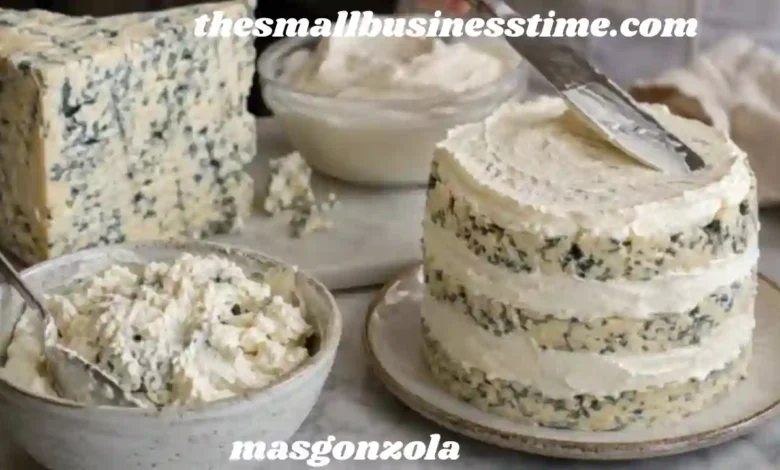
Another preparation method involves layering the two cheeses. In this version, the white mascarpone and blue-veined Gorgonzola remain visually distinguishable. This presentation can look attractive on a cheese board or appetizer platter.
The appearance is not necessarily identical across all products. Some mixtures may look almost completely white with small blue streaks, while others may have more noticeable blue sections.
The texture can also vary according to the ingredients’ proportions and temperature. A higher mascarpone content usually creates a softer and creamier result, while a greater quantity of Gorgonzola can make the preparation more structured and flavorful.
How Is Masgonzola Prepared?
Preparing a simple Masgonzola-style cheese mixture does not require complicated cooking equipment. The main requirement is obtaining suitable mascarpone and Gorgonzola and combining them in a way that creates the desired consistency.
A basic homemade preparation can begin with approximately equal amounts of mascarpone and Gorgonzola Dolce. This is only a starting point rather than an official or standardized recipe. People who prefer a milder result can increase the mascarpone, while those who enjoy stronger blue-cheese flavors can use more Gorgonzola.
First, allow the ingredients to soften slightly under appropriate refrigerated food-handling conditions. Cut or crumble the Gorgonzola into manageable pieces and place it in a mixing bowl with the mascarpone.
Next, combine the ingredients using a spoon or spatula. For a completely smooth result, mix until the two components are evenly distributed. For a more textured preparation, leave a few small pieces of Gorgonzola visible.
Taste the mixture and adjust the proportions if necessary. Additional ingredients, such as black pepper or fresh herbs, may be introduced depending on the intended recipe.
Once prepared, the mixture should be transferred to a clean, covered food container and refrigerated promptly. It should not be left at room temperature for extended periods.
The finished preparation can be used as a spread, pasta ingredient, sauce base, or filling for suitable savory dishes.
Popular Culinary Uses of Masgonzola
One reason the mascarpone and Gorgonzola combination is interesting is its versatility. The creamy consistency and distinctive flavor make it suitable for several types of food preparation.
Masgonzola in Pasta Dishes
Pasta is one of the most natural applications for Masgonzola. Its creamy consistency makes it suitable for creating rich sauces that coat different pasta shapes.
The mixture can be added to warm pasta with a small amount of reserved cooking water to create a smoother sauce. The cooking water helps distribute the cheese throughout the dish, while the mascarpone provides creaminess.
Penne, fettuccine, tagliatelle, and fusilli are examples of pasta shapes that can work well with this preparation.
Additional ingredients such as mushrooms, spinach, walnuts, and black pepper can introduce different textures and flavors.
Masgonzola on Pizza
Masgonzola can also be used as a topping for pizza. Its creamy structure and blue-cheese flavor make it an interesting alternative to more familiar cheese combinations.
A small amount can be distributed across the pizza before baking or incorporated into a cheese mixture with mozzarella.
Mushrooms, caramelized onions, spinach, and walnuts can complement the flavor. However, the quantity should be controlled because the Gorgonzola component may become quite noticeable.
The result is a richer pizza with a distinctive savory character.
Masgonzola in Risotto
Risotto is another dish that benefits from creamy cheese ingredients. Masgonzola can be incorporated toward the end of cooking to create a smooth and flavorful finish.
The mascarpone contributes richness, while Gorgonzola adds a more pronounced savory element. Together, they can produce a creamy risotto with a different character from traditional Parmesan-based versions.
Mushrooms are a particularly suitable addition because their earthy flavor works well with blue cheese.
Masgonzola as a Bread Spread
A simple way to enjoy Masgonzola is to spread it over toasted bread, crackers, or crostini.
The creamy texture makes it easy to distribute, while the blue-cheese component adds more flavor than ordinary cream cheese.
Fresh herbs, sliced pears, walnuts, or a small amount of honey can be used as additional toppings.
This preparation works well for light appetizers, informal gatherings, and cheese boards.
Masgonzola in Sandwiches
Sandwiches can benefit from a small amount of Masgonzola because it works as both a creamy spread and a flavor-enhancing ingredient.
It can be paired with grilled vegetables, mushrooms, roasted chicken, or other suitable fillings. The combination creates a richer sandwich without requiring several different sauces.
However, its distinctive taste means that it is usually better used in moderation.
Masgonzola in Stuffed Pasta
Ravioli and other filled pasta varieties often contain creamy cheese mixtures. Masgonzola can be considered for suitable fillings when a recipe calls for mascarpone, blue cheese, or a combination of soft cheeses.
It works particularly well with ingredients such as spinach, mushrooms, and herbs.
The amount of Gorgonzola should be adjusted carefully so that the filling remains balanced rather than becoming excessively strong.
Masgonzola and Traditional Gorgonzola: What Is the Difference?
Although the names are closely connected, Masgonzola and Gorgonzola should not be treated as identical products.
Gorgonzola is a specific Italian blue cheese with an established production tradition and protected geographical status. Its production follows defined requirements, and the cheese is recognized for its blue veining and distinctive flavor.
Masgonzola generally describes a combination involving Gorgonzola and mascarpone. It therefore has a different purpose and usually a different consistency.
The main difference is the presence of mascarpone, which softens the overall flavor and creates a creamier texture.
Another difference concerns legal recognition. Gorgonzola has Protected Designation of Origin status, whereas Masgonzola does not have an independently established protected designation.
For someone who enjoys strong blue cheese, traditional Gorgonzola may be the preferred option. Someone looking for a softer and more spreadable alternative may prefer the mascarpone combination.
Masgonzola Compared With Mascarpone
Mascarpone and Masgonzola are also different, even though mascarpone is one of the main ingredients used in the latter.
Mascarpone is a mild, rich dairy product with a smooth texture. It is commonly used in desserts, sweet preparations, and creamy savory dishes.
Masgonzola introduces the distinctive flavor of Gorgonzola into that creamy foundation.
As a result, the two preparations serve somewhat different culinary purposes. Mascarpone is suitable when a recipe requires richness without a strong cheese flavor, while Masgonzola is more appropriate when a creamy texture and blue-cheese character are both desired.
People who are unfamiliar with blue cheese may find plain mascarpone more approachable. However, those who enjoy experimenting with savory flavors may appreciate the additional complexity of Masgonzola.
Is Masgonzola a Healthy Food Choice?
The nutritional value of Masgonzola depends on the quantities and types of cheese used. Since its main components are dairy products, it generally contains fat, protein, calcium, and other nutrients naturally present in cheese.
Mascarpone is particularly rich and energy-dense. Gorgonzola also contains fat and protein, along with sodium and other naturally occurring dairy nutrients.
Combining these ingredients produces a preparation that can be satisfying in relatively small portions. However, its rich composition means that portion size is worth considering.
People monitoring their calorie, saturated fat, or sodium intake should check the nutritional information of the particular ingredients or finished product.
Cheese can contribute calcium and protein to a balanced eating pattern, but Masgonzola should not automatically be described as a health food or a nutritional supplement.
Its suitability depends on individual dietary requirements, portion size, and the rest of the meal.
Nutritional Considerations and Dietary Restrictions
Although Masgonzola may be an interesting ingredient, it is not suitable for every dietary requirement.
Both mascarpone and Gorgonzola are dairy products, meaning that the combination contains milk-derived ingredients. People with a milk allergy should avoid it unless a qualified healthcare professional has advised otherwise.
Those with lactose intolerance may also need to consider their individual tolerance. Different dairy products contain different amounts of lactose, and the finished mixture should not automatically be assumed to be lactose-free.
People following vegan diets cannot consume traditional Masgonzola because its main ingredients are dairy-based. Plant-based alternatives may be used to create a similar style of preparation, but the result would be a different product.
Pregnant individuals and people with weakened immune systems should pay particular attention to food-safety guidance concerning soft and blue-veined cheeses. Pasteurization, product handling, and cooking requirements matter. Following local public-health recommendations and checking the manufacturer’s guidance is important.
How to Store Masgonzola Properly
Proper storage helps maintain the quality, flavor, and safety of cheese preparations.
Because Masgonzola contains soft dairy ingredients, refrigeration is important. It should be kept in a clean, covered container and stored according to the instructions provided on the packaging or by the manufacturer.
Once opened or prepared, the mixture should be handled using clean utensils. This reduces the possibility of introducing unwanted bacteria or contaminating the remaining product.
Avoid leaving it exposed to room temperature for long periods, particularly during warm weather. Any unused portion should be returned to refrigeration promptly.
The exact storage period depends on the freshness of the ingredients, whether they have been opened, the preparation method, and the manufacturer’s recommendations.
Always check the product’s use-by date and discard it if there are signs of spoilage, unusual changes in smell, or an unexpected appearance. Do not assume that removing a visibly affected portion makes the remaining soft cheese safe.
Freezing is generally not ideal for preparations where a smooth texture is important. The consistency may change after thawing, although the suitability of freezing depends on the specific product and intended use.
How to Choose Quality Ingredients for Masgonzola
The quality of the finished preparation depends heavily on the ingredients selected.
When choosing mascarpone, look for a fresh product with a smooth consistency and a clean dairy aroma. Check the packaging for storage instructions, ingredient information, and the use-by date.
For Gorgonzola, the variety matters. Gorgonzola Dolce is generally a suitable starting point for people who want a milder, creamier combination. Gorgonzola Piccante can be used when a more pronounced flavor is preferred.
It is also worth considering the intended use. A softer preparation may be more appropriate for bread spreads and sauces, while a stronger mixture may be more suitable for particular appetizers or savory fillings.
When purchasing a finished cheese specialty, read the ingredient list rather than relying exclusively on the product name. Some products may contain additional ingredients or use different proportions.
A clear ingredient description is more useful than an unfamiliar marketing label when deciding whether a product meets personal expectations.
Why Is Masgonzola Interesting to Food Lovers?
Masgonzola is interesting because it demonstrates how two different ingredients can complement one another.
Food preparation often involves balancing contrasting characteristics. Sweet and sour ingredients, soft and crunchy textures, and mild and strong flavors are frequently combined to create more complex dishes.
The mascarpone and Gorgonzola pairing follows the same principle.
Mascarpone provides richness and softness, while Gorgonzola introduces a more recognizable savory personality. Instead of allowing one ingredient to completely dominate, the combination creates an opportunity for a more balanced result.
It also offers flexibility. People can change the proportions, experiment with different accompaniments, and use the preparation in several types of recipes.
For home cooks, this makes the combination worth understanding even if the name Masgonzola is unfamiliar.
Common Misconceptions About Masgonzola
Several misunderstandings can arise when researching Masgonzola because the term is not as widely recognized as the names of its two main ingredients.
One common misconception is that Masgonzola is an ancient Italian cheese with its own independently documented production history. The available evidence does not establish it as a separate traditional cheese with an independent protected designation.
Another misunderstanding is that Masgonzola is simply another name for Gorgonzola. This overlooks the important role of mascarpone in the combination.
Some people also assume that every preparation called Masgonzola has exactly the same proportions. In reality, the name does not establish one universal formula.
There is also confusion about whether the term is entirely fictional. Although it is not an independently protected cheese category, the underlying mascarpone and Gorgonzola combination is a genuine culinary preparation.
Separating the informal name from the actual ingredients makes the subject much easier to understand.
Is Masgonzola Worth Trying?
For people who enjoy creamy dairy products and distinctive savory flavors, Masgonzola may be worth exploring.
Its main attraction is the balance between mascarpone’s mild richness and Gorgonzola’s recognizable blue-cheese character. This makes it suitable for people who want something more flavorful than plain mascarpone but potentially less intense than Gorgonzola on its own.
It can be introduced into everyday cooking in relatively simple ways. A small quantity can enhance a pasta sauce, provide a flavorful bread spread, or add another dimension to a homemade pizza.
However, it is not necessarily suitable for everyone. People who dislike blue cheese may still find the Gorgonzola component too noticeable, even when it is combined with mascarpone.
The best way to understand its appeal is to start with a small amount and adjust the proportions according to individual taste.
The Future of Masgonzola in Modern Cooking
Modern cooking increasingly involves experimenting with ingredients, combining traditional recipes, and finding new ways to present familiar foods.
Cheese combinations are a natural part of this development. Restaurants, home cooks, and food enthusiasts frequently experiment with different textures and flavors to create interesting dishes.
Masgonzola fits naturally into this approach because it brings together two established Italian dairy products with contrasting characteristics.
Its potential applications are not limited to one particular cuisine. It can be used in pasta dishes, appetizers, sandwiches, risotto, pizza, and other recipes that benefit from creamy cheese ingredients.
However, it is important not to confuse culinary possibilities with claims about market popularity. Without reliable market data, it would be difficult to establish how widely Masgonzola is being adopted by restaurants or food manufacturers.
What can be said with confidence is that the underlying ingredient combination offers practical versatility. Its appeal comes from the relationship between the mildness of mascarpone and the distinctive flavor of Gorgonzola.
Final Thoughts on Masgonzola
Masgonzola is an interesting culinary term that becomes much easier to understand when its ingredients are examined separately. It generally refers to a combination of mascarpone and Gorgonzola, bringing together a rich, creamy dairy product and a distinctive Italian blue cheese.
The combination offers a balance of smoothness, mild sweetness, saltiness, and tangy flavor. Depending on the proportions, it can be prepared as a soft spread, a layered cheese specialty, or a creamy ingredient for savory recipes.
It is important to understand that Masgonzola is not a separately protected traditional Italian cheese in the same way as Gorgonzola. Rather, it is an informal culinary name associated with an established ingredient pairing.
For anyone interested in experimenting with cheese, Masgonzola provides an interesting starting point. Its versatility makes it suitable for pasta, risotto, pizza, sandwiches, appetizers, and other dishes where creamy texture and blue-cheese flavor can work together.
Ultimately, the appeal of Masgonzola lies in its simple combination of contrasting ingredients. It demonstrates how familiar foods can create a different culinary experience when brought together thoughtfully.
Frequently Asked Questions (FAQs)
1. What is Masgonzola?
Masgonzola generally refers to a creamy cheese preparation combining mascarpone and Gorgonzola. Mascarpone contributes richness and a smooth texture, while Gorgonzola provides the recognizable tangy and savory flavor of blue cheese.
2. Is Masgonzola a traditional Italian cheese?
Masgonzola is not independently established as a protected traditional Italian cheese variety. It is better understood as an informal name for a combination of mascarpone and Gorgonzola.
3. What does Masgonzola taste like?
Masgonzola generally has a creamy, rich, mildly sweet, salty, and tangy flavor. Its intensity depends on the proportions of mascarpone and Gorgonzola used in the preparation.
4. How can Masgonzola be used in cooking?
Masgonzola can be used in pasta sauces, risotto, pizza, sandwiches, bread spreads, appetizers, and suitable stuffed pasta fillings. Its creamy consistency makes it particularly useful in savory recipes.
5. Is Masgonzola the same as Gorgonzola?
No. Gorgonzola is an established Italian blue cheese, whereas Masgonzola generally describes a combination of Gorgonzola and mascarpone. The mascarpone makes the mixture creamier and generally softens the blue-cheese flavor.
ALSO READ : www that-bites .org foodies: A Complete Guide to Recipes, Reviews, Food Culture and Culinary Inspiration